In 1945, two brothers found a sealed jar buried in the Egyptian desert. Inside were fifty-two ancient texts, hidden for sixteen centuries because the truths they carried were too dangerous for the institutions of their time. One voice inside spoke without apology: I am the honored one and the scorned one. I am the whore and the holy one. She refused to resolve her own contradictions. She held them both.
Michelle Miller spent thirty years as a Child and Youth Worker, sitting with kids whose files arrived before they did, thick with diagnoses and incident reports written in language designed to describe a crisis without naming what caused it. She understood the children who burned things down just to feel warmth, because the village hadn't offered any. She didn't yet know she was also describing herself.
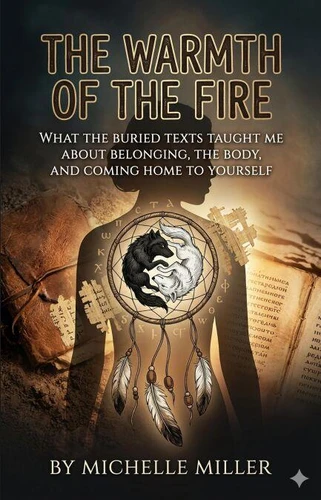
The Warmth of the Fire braids three threads into one reckoning: the buried wisdom of the Nag Hammadi library, three decades of front-line work with the most written-off kids in the system, and a body that finally went under after years of treading water. It's a memoir about what gets erased, who decides what counts as sacred, and what survives anyway, buried carefully enough that the right reader eventually finds it.
This is a book about feeding both wolves. About coming home to a self you didn't know you'd been writing on your own skin for years. About the particular kind of recognition that doesn't surprise you so much as confirm something you'd suspected all along: the map was already there. You just had to stop drowning long enough to read it.
In 1945, two brothers found a sealed jar buried in the Egyptian desert. Inside were fifty-two ancient texts, hidden for sixteen centuries because the truths they carried were too dangerous for the institutions of their time. One voice inside spoke without apology: I am the honored one and the scorned one. I am the whore and the holy one. She refused to resolve her own contradictions. She held them both.
Michelle Miller spent thirty years as a Child and Youth Worker, sitting with kids whose files arrived before they did, thick with diagnoses and incident reports written in language designed to describe a crisis without naming what caused it. She understood the children who burned things down just to feel warmth, because the village hadn't offered any. She didn't yet know she was also describing herself.
The Warmth of the Fire braids three threads into one reckoning: the buried wisdom of the Nag Hammadi library, three decades of front-line work with the most written-off kids in the system, and a body that finally went under after years of treading water. It's a memoir about what gets erased, who decides what counts as sacred, and what survives anyway, buried carefully enough that the right reader eventually finds it.
This is a book about feeding both wolves. About coming home to a self you didn't know you'd been writing on your own skin for years. About the particular kind of recognition that doesn't surprise you so much as confirm something you'd suspected all along: the map was already there. You just had to stop drowning long enough to read it.


 , qui est-ce ?