There is a conflict most people carry without naming. It lives beneath daily routines, inside conversations, and behind the constant stream of thoughts that shape our reactions. We experience it as stress, defensiveness, anxiety, or the feeling of being pulled in different directions by our own minds. The War That Ends After You Recognize It explores this hidden battlefield with unusual clarity. Using the language of strategy as a lens, the book reveals how inner conflict is sustained by unseen patterns of perception.
These patterns are not defeated through force or discipline. They dissolve when they are recognized. Across forty concise chapters, readers are guided through a practical investigation of awareness itself. Familiar situations - arguments, expectations, memories, and fears - become opportunities to observe how the mind constructs struggle. As these mechanisms become visible, a new kind of freedom appears: the ability to respond rather than react.
This is not a promise of instant enlightenment or permanent calm. It is a grounded exploration of how seeing clearly changes the structure of experience. The book speaks to readers interested in psychology, philosophy, and personal growth, offering tools that are both reflective and immediately applicable to everyday life. At its heart, this work is an invitation to look closely at the patterns that govern inner conflict - and to discover that the end of the war begins with recognition.
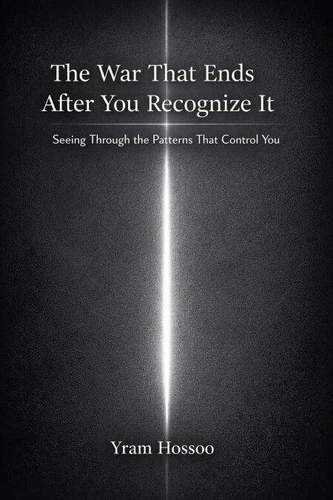
There is a conflict most people carry without naming. It lives beneath daily routines, inside conversations, and behind the constant stream of thoughts that shape our reactions. We experience it as stress, defensiveness, anxiety, or the feeling of being pulled in different directions by our own minds. The War That Ends After You Recognize It explores this hidden battlefield with unusual clarity. Using the language of strategy as a lens, the book reveals how inner conflict is sustained by unseen patterns of perception.
These patterns are not defeated through force or discipline. They dissolve when they are recognized. Across forty concise chapters, readers are guided through a practical investigation of awareness itself. Familiar situations - arguments, expectations, memories, and fears - become opportunities to observe how the mind constructs struggle. As these mechanisms become visible, a new kind of freedom appears: the ability to respond rather than react.
This is not a promise of instant enlightenment or permanent calm. It is a grounded exploration of how seeing clearly changes the structure of experience. The book speaks to readers interested in psychology, philosophy, and personal growth, offering tools that are both reflective and immediately applicable to everyday life. At its heart, this work is an invitation to look closely at the patterns that govern inner conflict - and to discover that the end of the war begins with recognition.


 , qui est-ce ?