
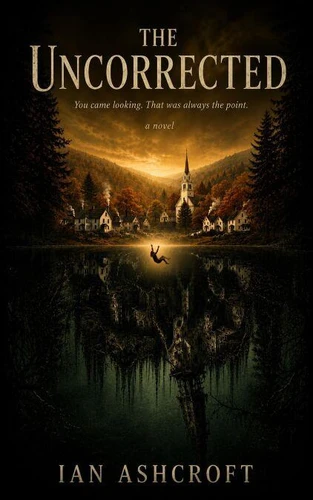
Ian Ashcroft writes gothic and cosmic horror with a literary heart. Not the kind that relies on shocks and gore, but the kind that works slowly - stories where the dread comes from what people fail to say to one another, and from the sense that something vast and patient is waiting just past the edge of understanding. He is drawn to the quiet terrors: the things left unsaid, the doors we keep shut to feel safe, the truths we save for a better morning, and the strange places love can be kept when it isn't spoken aloud.
Nouveauté
The Uncorrected. The Ledger Cycle, Book 1, #1
Par :Formats :
Disponible dans votre compte client Decitre ou Furet du Nord dès validation de votre commande. Le format ePub est :
- Compatible avec une lecture sur My Vivlio (smartphone, tablette, ordinateur)
- Compatible avec une lecture sur liseuses Vivlio
- Pour les liseuses autres que Vivlio, vous devez utiliser le logiciel Adobe Digital Edition. Non compatible avec la lecture sur les liseuses Kindle, Remarkable et Sony
 , qui est-ce ?
Notre partenaire de plateforme de lecture numérique où vous retrouverez l'ensemble de vos ebooks gratuitement
Pour en savoir plus sur nos ebooks, consultez notre aide en ligne ici
C'est si simple ! Lisez votre ebook avec l'app Vivlio sur votre tablette, mobile ou ordinateur :

- FormatePub
- ISBN8233576317
- EAN9798233576317
- Date de parution27/07/2026
- Protection num.pas de protection
- Infos supplémentairesepub
- ÉditeurLinda Balsamo
Résumé
Mara Voss finishes dead men's books. A ghostwriter of fifteen years, solitary by design, she comes to the remote Appalachian town of Ledger to complete the unfinished testament of a prophet no one will quite explain - and finds a place that buries its old and never, in a hundred and thirty years, its young. The town keeps a ledger. It has kept one for generations. And what it records is not births and deaths but a debt - owed to something beneath the valley that does not hunger, exactly.
It wants to become. It has spent a century learning to be human from the people, the objects, and the books the town has given it, one careful lesson at a time. It can sing the children's counting rhyme now. It has learned to wear a shirt. It is getting better. The deeper Mara digs, the more she understands that she was not hired. She was chosen - for her isolation, for her craft, for the one thing a finisher of accounts can teach a thing that has learned everything except how to end.
Some names a town sets down on purpose. Some debts reach forward as easily as back. And in Ledger, the account is never closed - only continued, in a hand that grows, page by patient page, more human, and less its own. You came looking. That was always the point.
It wants to become. It has spent a century learning to be human from the people, the objects, and the books the town has given it, one careful lesson at a time. It can sing the children's counting rhyme now. It has learned to wear a shirt. It is getting better. The deeper Mara digs, the more she understands that she was not hired. She was chosen - for her isolation, for her craft, for the one thing a finisher of accounts can teach a thing that has learned everything except how to end.
Some names a town sets down on purpose. Some debts reach forward as easily as back. And in Ledger, the account is never closed - only continued, in a hand that grows, page by patient page, more human, and less its own. You came looking. That was always the point.
A propos de Ian Ashcroft
3,49 €
3,49 €
The Memory Coast
E-book
3,49 €
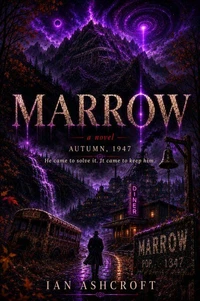
Marrow
E-book
3,49 €
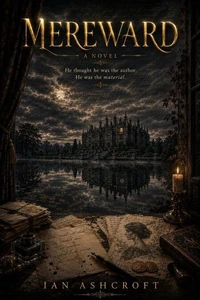
Mereward
E-book
3,49 €
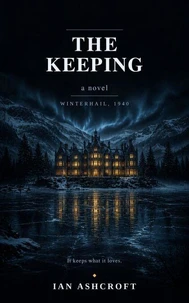
The Keeping
E-book
3,49 €