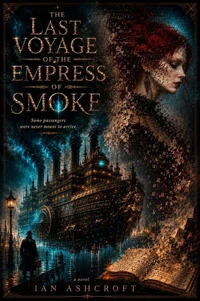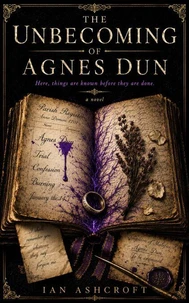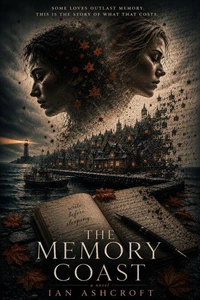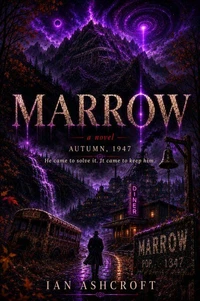
Ian Ashcroft writes gothic and cosmic horror with a literary heart. Not the kind that relies on shocks and gore, but the kind that works slowly - stories where the dread comes from what people fail to say to one another, and from the sense that something vast and patient is waiting just past the edge of understanding. He is drawn to the quiet terrors: the things left unsaid, the doors we keep shut to feel safe, the truths we save for a better morning, and the strange places love can be kept when it isn't spoken aloud.
Nouveauté
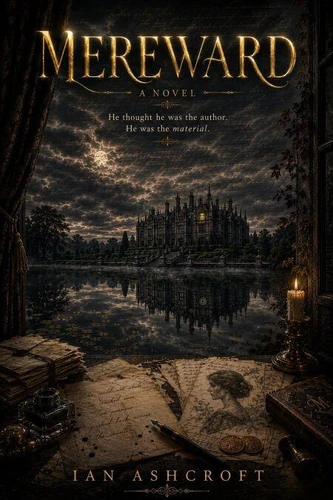
Mereward
Par :Formats :
Disponible dans votre compte client Decitre ou Furet du Nord dès validation de votre commande. Le format ePub est :
- Compatible avec une lecture sur My Vivlio (smartphone, tablette, ordinateur)
- Compatible avec une lecture sur liseuses Vivlio
- Pour les liseuses autres que Vivlio, vous devez utiliser le logiciel Adobe Digital Edition. Non compatible avec la lecture sur les liseuses Kindle, Remarkable et Sony
 , qui est-ce ?
Notre partenaire de plateforme de lecture numérique où vous retrouverez l'ensemble de vos ebooks gratuitement
Pour en savoir plus sur nos ebooks, consultez notre aide en ligne ici
C'est si simple ! Lisez votre ebook avec l'app Vivlio sur votre tablette, mobile ou ordinateur :

- FormatePub
- ISBN8235854048
- EAN9798235854048
- Date de parution29/07/2026
- Protection num.pas de protection
- Infos supplémentairesepub
- ÉditeurIoakim Ioakim
Résumé
London, 1920. A newspaper columnist meets a woman twice - a bakery, a queue, the smell of flour, two pennies pushed back across the counter. Nothing is spoken. Nothing is promised. Then she is dead, and the small ordinary warmth of her becomes the one thing he cannot put down. Unable to write a word, he takes a room at Mereward - a beautiful, failing house in the west country that has, for generations, taken in writers.
By day its lawns run green to a still lake. He begins, at last, to write her: the wrist, the turned tooth, the way she could not abide a crooked sum. The words come easily. They come too easily. Then the pages begin to appear that he does not remember writing. Pages in a hand almost his own. Pages that know things he never knew - and that are not trying to tell her story. They are trying to make one.
For at Mereward the unfinished do not rest. Abandoned letters, interrupted lives, half-written books - they gather in certain places, hungry, waiting for a hand to complete them. And the more beautiful the woman on the page becomes, the less she resembles anyone who ever lived; the more he loves her, the more of himself she takes; and the closer he comes to the ending, the more terrible the question grows of who, in this house, has been the author all along - and who the material.
A love story that is also a haunting; a haunting that is also a confession. MEREWARD asks what we steal from the people we turn into stories - and refuses, to the last page, to tell us whether what waits in the ground is a curse, or a mercy.
By day its lawns run green to a still lake. He begins, at last, to write her: the wrist, the turned tooth, the way she could not abide a crooked sum. The words come easily. They come too easily. Then the pages begin to appear that he does not remember writing. Pages in a hand almost his own. Pages that know things he never knew - and that are not trying to tell her story. They are trying to make one.
For at Mereward the unfinished do not rest. Abandoned letters, interrupted lives, half-written books - they gather in certain places, hungry, waiting for a hand to complete them. And the more beautiful the woman on the page becomes, the less she resembles anyone who ever lived; the more he loves her, the more of himself she takes; and the closer he comes to the ending, the more terrible the question grows of who, in this house, has been the author all along - and who the material.
A love story that is also a haunting; a haunting that is also a confession. MEREWARD asks what we steal from the people we turn into stories - and refuses, to the last page, to tell us whether what waits in the ground is a curse, or a mercy.