Breakage is inevitable. Irreparability is a choice. The Architecture of Repair: From Material Fragments to Psychological ReconstructionA Manifesto on Resilience, Mastery, and the Value of the Non-Disposable. Why, when something breaks-be it a cherished object, a bond of trust, or our ownpeace of mind-do we feel an irresistible urge to repair it, even when discarding itwould be easier?This interdisciplinary essay uncovers the neurological, psychological, and cultural foun-dation of our compulsion toward restoration.
Using the repair of a guitar as its centralnarrative thread, the text explores how manual skills (diagnosis, stabilization, and pre-cision) translate directly into effective strategies for confronting complex emotionalwounds and relational fractures. This book reveals:The Neuroscience of Fixing: How the error circuit (Anterior Cingulate Cortex) and thedopaminergic reward system reinforce problem-solving behavior, leading us to seek in-creasingly complex repair challenges.
The Grammar of Mending: The logical sequences of lutherie (sanding, gluing, curing) ascognitive scaffolding for understanding the reconstruction of trust and the process offorgiveness. The Psychology of Broken Things: Why a damaged sentimental object evokes mortalityand how its successful restoration offers a symbolic victory against entropy and imper-manence. The Timeline of Healing: The frustrating temporal mismatch between repairing a neckand rebuilding from attachment trauma, and how Memory Reconsolidation researchoffers a precise roadmap for deep psychological change.
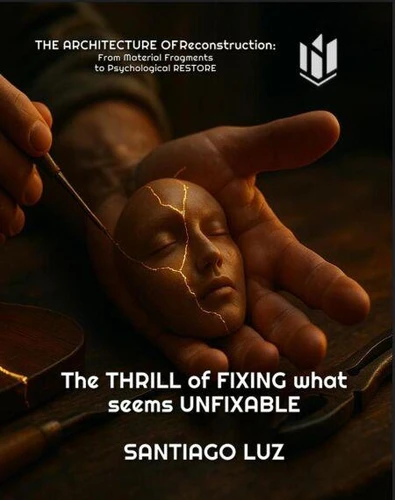
The Aesthetics of Scars: The philosophy of kintsugi and the inherent beauty found invisible repair lines, contrasting sharply with the Western culture of concealing flaws.
Breakage is inevitable. Irreparability is a choice. The Architecture of Repair: From Material Fragments to Psychological ReconstructionA Manifesto on Resilience, Mastery, and the Value of the Non-Disposable. Why, when something breaks-be it a cherished object, a bond of trust, or our ownpeace of mind-do we feel an irresistible urge to repair it, even when discarding itwould be easier?This interdisciplinary essay uncovers the neurological, psychological, and cultural foun-dation of our compulsion toward restoration.
Using the repair of a guitar as its centralnarrative thread, the text explores how manual skills (diagnosis, stabilization, and pre-cision) translate directly into effective strategies for confronting complex emotionalwounds and relational fractures. This book reveals:The Neuroscience of Fixing: How the error circuit (Anterior Cingulate Cortex) and thedopaminergic reward system reinforce problem-solving behavior, leading us to seek in-creasingly complex repair challenges.
The Grammar of Mending: The logical sequences of lutherie (sanding, gluing, curing) ascognitive scaffolding for understanding the reconstruction of trust and the process offorgiveness. The Psychology of Broken Things: Why a damaged sentimental object evokes mortalityand how its successful restoration offers a symbolic victory against entropy and imper-manence. The Timeline of Healing: The frustrating temporal mismatch between repairing a neckand rebuilding from attachment trauma, and how Memory Reconsolidation researchoffers a precise roadmap for deep psychological change.
The Aesthetics of Scars: The philosophy of kintsugi and the inherent beauty found invisible repair lines, contrasting sharply with the Western culture of concealing flaws.


 , qui est-ce ?