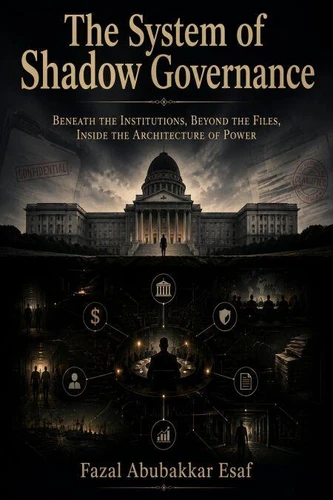
Every government operates through visible institutions. Citizens see elected representatives, ministries, departments, police agencies, regulatory bodies, courts, and administrative offices. These institutions issue notifications, process files, approve projects, conduct investigations, and implement policies. This visible structure forms the official architecture of governance. Yet large institutions also develop informal networks of coordination.
These networks emerge naturally through professional relationships, organizational incentives, administrative routines, political pressures, resource constraints, and the constant negotiation between competing priorities. Understanding governance therefore requires more than reading legislation or organizational charts. It requires studying movement. Movement of files. Movement of information. Movement of people.
Movement of resources. Movement of influence. Patterns that appear insignificant in isolation may become meaningful when observed collectively. Delays, transfers, approvals, procedural complexity, fragmented responsibility, and information bottlenecks can interact in ways that produce outcomes no single participant fully controls. Throughout this book, investigations unfold not by uncovering a single conspiracy but by recognizing recurring organizational patterns.
The focus remains on systems rather than villains, incentives rather than assumptions, and evidence rather than speculation. The central question is simple:What happens when governance itself becomes the subject of investigation?The chapters that follow attempt to answer that question by tracing the hidden mechanics that can exist beneath the visible machinery of public administration, while emphasizing the importance of evidence, accountability, and institutional learning.
The objective is not to undermine confidence in public institutions. It is to deepen understanding of how complex systems function, adapt, and evolve-and why transparency, oversight, and informed citizenship remain essential to effective governance.
Every government operates through visible institutions. Citizens see elected representatives, ministries, departments, police agencies, regulatory bodies, courts, and administrative offices. These institutions issue notifications, process files, approve projects, conduct investigations, and implement policies. This visible structure forms the official architecture of governance. Yet large institutions also develop informal networks of coordination.
These networks emerge naturally through professional relationships, organizational incentives, administrative routines, political pressures, resource constraints, and the constant negotiation between competing priorities. Understanding governance therefore requires more than reading legislation or organizational charts. It requires studying movement. Movement of files. Movement of information. Movement of people.
Movement of resources. Movement of influence. Patterns that appear insignificant in isolation may become meaningful when observed collectively. Delays, transfers, approvals, procedural complexity, fragmented responsibility, and information bottlenecks can interact in ways that produce outcomes no single participant fully controls. Throughout this book, investigations unfold not by uncovering a single conspiracy but by recognizing recurring organizational patterns.
The focus remains on systems rather than villains, incentives rather than assumptions, and evidence rather than speculation. The central question is simple:What happens when governance itself becomes the subject of investigation?The chapters that follow attempt to answer that question by tracing the hidden mechanics that can exist beneath the visible machinery of public administration, while emphasizing the importance of evidence, accountability, and institutional learning.
The objective is not to undermine confidence in public institutions. It is to deepen understanding of how complex systems function, adapt, and evolve-and why transparency, oversight, and informed citizenship remain essential to effective governance.


 , qui est-ce ?