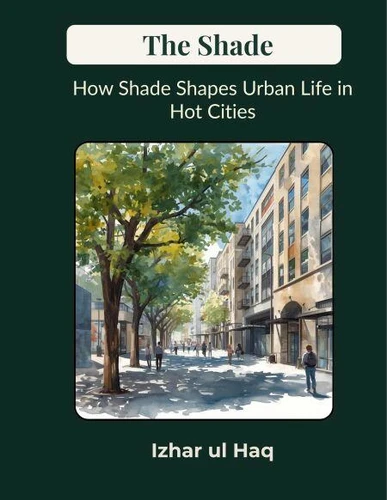
In a hot city, you can feel the difference between sun and shade in a single step. One side of the street is bright and empty. The other side, in shadow, is full of people. The Shade is a short, very readable book about that small step-and how it quietly shapes our daily lives. Through simple, vivid street scenes from South Asia, the Middle East, Africa, and other warm regions, this book explores how shade decides: Where we walk and which side of the road we choose.
Where vendors survive-or give up and move on. Where children actually play, not just where playgrounds are drawn. Where strangers are willing to sit together, even without speaking. You will meet a fruit seller slowly pushing his cart into the shadow of a building, a motorcycle rider resting under a flyover while traffic roars overhead, children leaving a sunny playground to play in the shade of a parked truck, and brand-new sidewalks that no one uses because there is nowhere to hide from the sun.
The Shade is not a technical manual. It is written in clear, everyday language for anyone who has ever searched for a patch of shadow on a hot day. Each chapter focuses on one simple idea: the "first shade" where people naturally gather, the moving "shadow paths" people follow through the city, the quiet "economy of shade" that keeps tea stalls and fruit carts alive, the improvised cloth canopies that shopkeepers build, and the sad emptiness of streets where shade has disappeared.
Along the way, the book also offers a gentle invitation to rethink how we design and care for our cities. It suggests small, practical steps-tree-lined streets, shaded sidewalks, verandas and arcades, seats under trees, fabric canopies in markets, and continuous shaded routes linking homes, schools, mosques, bus stops, and workplaces. Whether you are a city planner, a student, a street photographer, an activist, or simply someone who walks their city every day, The Shade will change how you notice trees, walls, parked vehicles, flyovers, and the shifting shapes they cast on the ground.
After reading it, you may find yourself following the shadows on the street-and seeing your own city in a new way.
In a hot city, you can feel the difference between sun and shade in a single step. One side of the street is bright and empty. The other side, in shadow, is full of people. The Shade is a short, very readable book about that small step-and how it quietly shapes our daily lives. Through simple, vivid street scenes from South Asia, the Middle East, Africa, and other warm regions, this book explores how shade decides: Where we walk and which side of the road we choose.
Where vendors survive-or give up and move on. Where children actually play, not just where playgrounds are drawn. Where strangers are willing to sit together, even without speaking. You will meet a fruit seller slowly pushing his cart into the shadow of a building, a motorcycle rider resting under a flyover while traffic roars overhead, children leaving a sunny playground to play in the shade of a parked truck, and brand-new sidewalks that no one uses because there is nowhere to hide from the sun.
The Shade is not a technical manual. It is written in clear, everyday language for anyone who has ever searched for a patch of shadow on a hot day. Each chapter focuses on one simple idea: the "first shade" where people naturally gather, the moving "shadow paths" people follow through the city, the quiet "economy of shade" that keeps tea stalls and fruit carts alive, the improvised cloth canopies that shopkeepers build, and the sad emptiness of streets where shade has disappeared.
Along the way, the book also offers a gentle invitation to rethink how we design and care for our cities. It suggests small, practical steps-tree-lined streets, shaded sidewalks, verandas and arcades, seats under trees, fabric canopies in markets, and continuous shaded routes linking homes, schools, mosques, bus stops, and workplaces. Whether you are a city planner, a student, a street photographer, an activist, or simply someone who walks their city every day, The Shade will change how you notice trees, walls, parked vehicles, flyovers, and the shifting shapes they cast on the ground.
After reading it, you may find yourself following the shadows on the street-and seeing your own city in a new way.

 , qui est-ce ?