SOLDES
Jusqu'à -70% sur une sélection d'articles*

Nouveauté
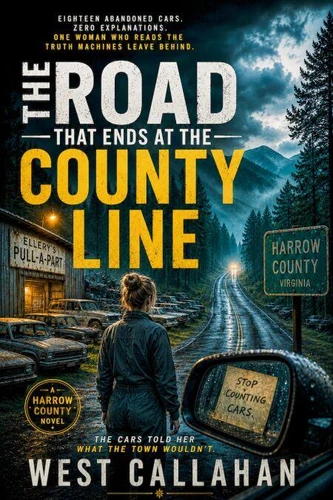
The Road That Ends at the County Line. Harrow County, #9
Par :Formats :
Disponible dans votre compte client Decitre ou Furet du Nord dès validation de votre commande. Le format ePub est :
- Compatible avec une lecture sur My Vivlio (smartphone, tablette, ordinateur)
- Compatible avec une lecture sur liseuses Vivlio
- Pour les liseuses autres que Vivlio, vous devez utiliser le logiciel Adobe Digital Edition. Non compatible avec la lecture sur les liseuses Kindle, Remarkable et Sony
 , qui est-ce ?
Notre partenaire de plateforme de lecture numérique où vous retrouverez l'ensemble de vos ebooks gratuitement
Pour en savoir plus sur nos ebooks, consultez notre aide en ligne ici
C'est si simple ! Lisez votre ebook avec l'app Vivlio sur votre tablette, mobile ou ordinateur :

- FormatePub
- ISBN8235967052
- EAN9798235967052
- Date de parution07/06/2026
- Protection num.pas de protection
- Infos supplémentairesepub
- ÉditeurIoakim Ioakim
Résumé
Rook Ellery runs a salvage yard on the wrong end of Route 11 in Harrow County, Virginia. She lives alone in a shipping container behind the fence, pulls engines for a living, and hasn't spoken to her father in twenty-one years - not since the morning he vanished and left his truck in the yard with the keys still in it. She also tows abandoned cars from the roadside. Eighteen of them now sit in what she calls the orphanage row - all found on the same dark stretch of road near the county line, all unclaimed.
Most look like routine abandonments. But some contain packed suitcases. Full wallets. A child's juice box in a car registered to a woman with no children. People don't leave packed suitcases behind. Not unless the leaving wasn't their idea. When a local journalist starts asking questions, Rook begins reading the cars the way she reads engines - methodically, forensically, with the trained attention of a woman who learned machines before she learned people.
She discovers that every rearview mirror in the flagged vehicles has been adjusted to the same height. The same driver. Someone who is not the registered owner. The trail leads to a county relocation program that has been quietly moving vulnerable residents out of Harrow for twenty-five years. A calculating caseworker who files every case as "resolved." A charismatic pastor whose charity funds the operation - and whose relationship with Rook's mother rewrote her family's history.
And a silent handyman who drives the church van south toward the county line, drops his passengers in the dark, and comes back alone. Anonymous notes appear on Rook's windshield. Files are burned. The county sheriff refuses to act. And under the trailer steps of the man who works in her own yard, Rook finds a coffee can full of driver's licenses belonging to people the town decided to forget. The Road That Ends at the County Line is a slow-burn rural thriller told in the sharp, dry voice of a woman who reads machines because machines are the only things that tell the truth.
It is a story about what abandoned cars say when someone finally listens - about institutional corruption, small-town silence, and the long road between the life you were given and the one you had to build from the parts that were left behind.
Most look like routine abandonments. But some contain packed suitcases. Full wallets. A child's juice box in a car registered to a woman with no children. People don't leave packed suitcases behind. Not unless the leaving wasn't their idea. When a local journalist starts asking questions, Rook begins reading the cars the way she reads engines - methodically, forensically, with the trained attention of a woman who learned machines before she learned people.
She discovers that every rearview mirror in the flagged vehicles has been adjusted to the same height. The same driver. Someone who is not the registered owner. The trail leads to a county relocation program that has been quietly moving vulnerable residents out of Harrow for twenty-five years. A calculating caseworker who files every case as "resolved." A charismatic pastor whose charity funds the operation - and whose relationship with Rook's mother rewrote her family's history.
And a silent handyman who drives the church van south toward the county line, drops his passengers in the dark, and comes back alone. Anonymous notes appear on Rook's windshield. Files are burned. The county sheriff refuses to act. And under the trailer steps of the man who works in her own yard, Rook finds a coffee can full of driver's licenses belonging to people the town decided to forget. The Road That Ends at the County Line is a slow-burn rural thriller told in the sharp, dry voice of a woman who reads machines because machines are the only things that tell the truth.
It is a story about what abandoned cars say when someone finally listens - about institutional corruption, small-town silence, and the long road between the life you were given and the one you had to build from the parts that were left behind.
A propos de West Callahan
2,99 €
2,99 €
2,99 €
2,99 €
2,99 €
2,99 €
2,99 €
2,99 €
2,99 €