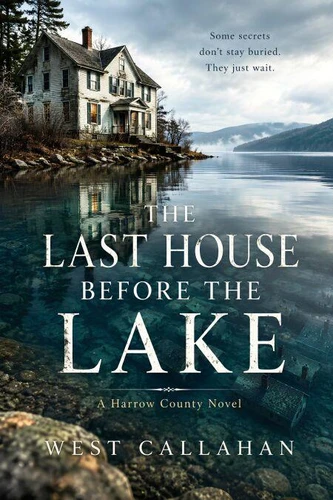
Nell Ogilvie-Park hasn't set foot in Harrow, Oregon, in thirty years. She left at eighteen with a duffel bag and a Greyhound ticket, and she made sure never to look back. Her mother was dead. Her father had walked out. The house at the end of Cairn Road-a crumbling colonial where the pavement surrenders to gravel and the gravel surrenders to the lakeshore-was nothing but tonnage and bad memories. Now she's come back to tear it down.
But on the first morning of demolition, the crew breaks through the basement floor and discovers a sealed room that doesn't appear on any blueprint. Inside: industrial shelving lined with dozens of padlocked metal boxes, each one labeled with a founding family's name. Within hours, three of Harrow's most prominent families have fled town without explanation. A retired judge calls Nell to demand his box back.
A note is slipped under her motel door in the middle of the night: DON'T OPEN THE BASEMENT. Nell opens it anyway. What she finds inside the Ogilvie box destroys the story she's been telling herself for three decades. Her father didn't leave. He was taken-committed to a psychiatric facility under a false name, diagnosed with a disorder he doesn't have, moved from room to room across eastern Oregon for thirty-two years by a shell company funded by the town's most powerful family.
Her mother didn't die of cancer. She died because she tried to get him back, and someone adjusted her prescriptions until her heart stopped. And the lake-the beautiful, glacial lake at the center of everything, the lake on the postcards and the real estate listings, the lake where Nell learned to swim-is not a lake at all. It is a man-made flood, created in 1891 when six founding families dynamited a natural dam to drown a valley and bury the forty-three homesteaders who lived there.
The vault beneath the Ogilvie house was built to ensure collective silence: every family stored proof of its own complicity, so that none could speak without destroying the rest. For sixty years, one woman held the key. Eudora Finch-keeper of the vault, reader of every secret, architect of a quiet, invisible empire of leverage-managed Harrow from the shadows, deciding elections, suppressing evidence, and eliminating anyone who got too close to the truth.
She is eighty-two now, sharp-eyed and deliberate, and she wants the secret buried deeper than the dead. Nell wants it exhumed. As she tears open box after box, traces her father through a labyrinth of falsified records and shell companies, and follows forty-three hand-carved stone markers along the lakeshore-grave markers placed by the town's own founder for the people he murdered-Nell is forced to confront the ugliest truth of all: the Ogilvies were co-founders of the covenant.
Her family didn't just keep the secret. They helped build the house that held it. To expose Harrow, she must expose herself. To give the dead their names, she must destroy the only name she has left.
Nell Ogilvie-Park hasn't set foot in Harrow, Oregon, in thirty years. She left at eighteen with a duffel bag and a Greyhound ticket, and she made sure never to look back. Her mother was dead. Her father had walked out. The house at the end of Cairn Road-a crumbling colonial where the pavement surrenders to gravel and the gravel surrenders to the lakeshore-was nothing but tonnage and bad memories. Now she's come back to tear it down.
But on the first morning of demolition, the crew breaks through the basement floor and discovers a sealed room that doesn't appear on any blueprint. Inside: industrial shelving lined with dozens of padlocked metal boxes, each one labeled with a founding family's name. Within hours, three of Harrow's most prominent families have fled town without explanation. A retired judge calls Nell to demand his box back.
A note is slipped under her motel door in the middle of the night: DON'T OPEN THE BASEMENT. Nell opens it anyway. What she finds inside the Ogilvie box destroys the story she's been telling herself for three decades. Her father didn't leave. He was taken-committed to a psychiatric facility under a false name, diagnosed with a disorder he doesn't have, moved from room to room across eastern Oregon for thirty-two years by a shell company funded by the town's most powerful family.
Her mother didn't die of cancer. She died because she tried to get him back, and someone adjusted her prescriptions until her heart stopped. And the lake-the beautiful, glacial lake at the center of everything, the lake on the postcards and the real estate listings, the lake where Nell learned to swim-is not a lake at all. It is a man-made flood, created in 1891 when six founding families dynamited a natural dam to drown a valley and bury the forty-three homesteaders who lived there.
The vault beneath the Ogilvie house was built to ensure collective silence: every family stored proof of its own complicity, so that none could speak without destroying the rest. For sixty years, one woman held the key. Eudora Finch-keeper of the vault, reader of every secret, architect of a quiet, invisible empire of leverage-managed Harrow from the shadows, deciding elections, suppressing evidence, and eliminating anyone who got too close to the truth.
She is eighty-two now, sharp-eyed and deliberate, and she wants the secret buried deeper than the dead. Nell wants it exhumed. As she tears open box after box, traces her father through a labyrinth of falsified records and shell companies, and follows forty-three hand-carved stone markers along the lakeshore-grave markers placed by the town's own founder for the people he murdered-Nell is forced to confront the ugliest truth of all: the Ogilvies were co-founders of the covenant.
Her family didn't just keep the secret. They helped build the house that held it. To expose Harrow, she must expose herself. To give the dead their names, she must destroy the only name she has left.


 , qui est-ce ?