SOLDES
Jusqu'à -70% sur une sélection d'articles*

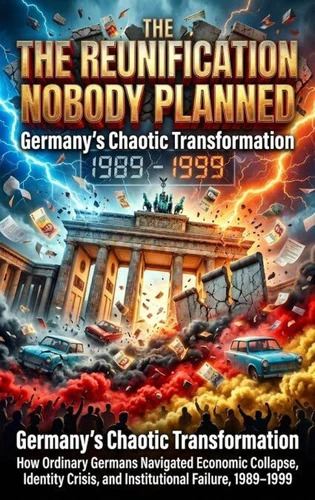
The Reunification Nobody Planned: Germany's Chaotic Transformation. How Ordinary Germans Navigated Economic Collapse, Identity Crisis, and Institutional Failure, 1989–1999
Par :Formats :
Disponible dans votre compte client Decitre ou Furet du Nord dès validation de votre commande. Le format ePub est :
- Compatible avec une lecture sur My Vivlio (smartphone, tablette, ordinateur)
- Compatible avec une lecture sur liseuses Vivlio
- Pour les liseuses autres que Vivlio, vous devez utiliser le logiciel Adobe Digital Edition. Non compatible avec la lecture sur les liseuses Kindle, Remarkable et Sony
 , qui est-ce ?
Notre partenaire de plateforme de lecture numérique où vous retrouverez l'ensemble de vos ebooks gratuitement
Pour en savoir plus sur nos ebooks, consultez notre aide en ligne ici
C'est si simple ! Lisez votre ebook avec l'app Vivlio sur votre tablette, mobile ou ordinateur :

- Nombre de pages177
- FormatePub
- ISBN978-3-565-21466-2
- EAN9783565214662
- Date de parution31/01/2026
- Protection num.pas de protection
- Taille2 Mo
- Infos supplémentairesepub
- ÉditeurEmphaloz Publishing House
Résumé
German reunification is remembered as a triumph of democracy, but for millions it meant unemployment, cultural erasure, and the sudden collapse of every institution they had known. This book traces how East and West Germans experienced the decade after the Wall fell in 1989, moving beyond official narratives to examine the workers who lost careers overnight, families divided by economic migration, and communities struggling to reconcile incompatible memories of the same country.
Drawing on personal testimonies, Treuhand archives, social research data, and local government records, the narrative follows reunification through the eyes of those who lived it: Leipzig factory workers facing privatization, West German administrators imposing unfamiliar systems, small-town mayors managing social disintegration, and young people caught between nostalgia for the GDR and promises of prosperity that never materialized for many.
The book explores how the Treuhand's rushed privatization destroyed East German industry while enriching West German investors, how welfare systems collapsed under pressure from mass unemployment, and how different historical experiences-antifascism versus Vergangenheitsbewältigung, socialist workplace culture versus market competition-created misunderstandings that persist today.
It examines the emergence of Ostalgie as both genuine loss and political manipulation, and how reunification's failures contributed to contemporary right-wing populism in former East Germany. Relevant for readers interested in how rapid systemic change affects ordinary lives, how economic transformation creates lasting social divisions, and why official success stories often conceal institutional failures and human costs.
It examines the emergence of Ostalgie as both genuine loss and political manipulation, and how reunification's failures contributed to contemporary right-wing populism in former East Germany. Relevant for readers interested in how rapid systemic change affects ordinary lives, how economic transformation creates lasting social divisions, and why official success stories often conceal institutional failures and human costs.
A propos de Gideon Hart













8,49 €