

The Pan-German Programme. The Petition of the Six Associations and the Manifesto of the Intellectuals
Par : ,Formats :
Disponible dans votre compte client Decitre ou Furet du Nord dès validation de votre commande. Le format ePub est :
- Compatible avec une lecture sur My Vivlio (smartphone, tablette, ordinateur)
- Compatible avec une lecture sur liseuses Vivlio
- Pour les liseuses autres que Vivlio, vous devez utiliser le logiciel Adobe Digital Edition. Non compatible avec la lecture sur les liseuses Kindle, Remarkable et Sony
 , qui est-ce ?
Notre partenaire de plateforme de lecture numérique où vous retrouverez l'ensemble de vos ebooks gratuitement
Pour en savoir plus sur nos ebooks, consultez notre aide en ligne ici
C'est si simple ! Lisez votre ebook avec l'app Vivlio sur votre tablette, mobile ou ordinateur :

- Nombre de pages24
- FormatePub
- ISBN406-4-06-609708-0
- EAN4064066097080
- Date de parution19/05/2021
- Protection num.Digital Watermarking
- Taille672 Ko
- Infos supplémentairesepub
- ÉditeurGOOD PRESS
Résumé
The Pan-German Programme is a seminal treatise that articulates the aspirations of German nationalism in the late 19th century. Written anonymously, the text employs a persuasive rhetorical style, weaving together historical analysis, socio-political commentary, and fervent calls for national unity. The author's arguments are constructed around the notion of a Greater Germany, emphasizing the need for territorial expansion and cultural cohesion among all German-speaking peoples, a concept that reflects the nationalistic fervor prevailing in the context of post-Unification Europe.
The work is marked by a clarity of vision, foreseeing the complexities of national identity and geopolitics that would later play a significant role in Europe'Äôs tumultuous 20th century. Though the identity of the author remains a mystery, the insights contained within suggest a deep engagement with the cultural and political currents of the time. Scholars posit that the anonymous nature of the work may reflect the polarizing climate surrounding matters of nationalism.
This text resonates with the fears and ambitions of a nation that was gradually navigating its place on the global stage, longing for affirmation and recognition amidst European powers. I highly recommend The Pan-German Programme to scholars and enthusiasts of European history and nationalism. Its enduring relevance offers crucial reflections on national identity, making it an essential read for those seeking to understand the roots of contemporary nationalistic movements in Europe.
The work is marked by a clarity of vision, foreseeing the complexities of national identity and geopolitics that would later play a significant role in Europe'Äôs tumultuous 20th century. Though the identity of the author remains a mystery, the insights contained within suggest a deep engagement with the cultural and political currents of the time. Scholars posit that the anonymous nature of the work may reflect the polarizing climate surrounding matters of nationalism.
This text resonates with the fears and ambitions of a nation that was gradually navigating its place on the global stage, longing for affirmation and recognition amidst European powers. I highly recommend The Pan-German Programme to scholars and enthusiasts of European history and nationalism. Its enduring relevance offers crucial reflections on national identity, making it an essential read for those seeking to understand the roots of contemporary nationalistic movements in Europe.
A propos de Anonymous

Pistis Sophia
E-book
1,99 €
1,99 €
Greek Folk Tales
E-book
8,99 €
The Rig Veda
E-book
0,49 €
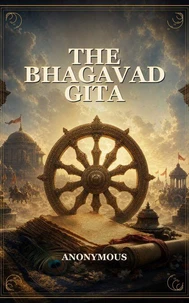
The Bhagavad Gita
E-book
0,49 €

0,49 €

The Dhammapada
E-book
0,49 €

The Upanishads
E-book
0,49 €

Sophie Jewett
E-book
0,49 €

Clements Markham
E-book
0,49 €
The London Prodigal
E-book
0,49 €
Mucedorus
E-book
0,49 €
Arden of Faversham
E-book
0,49 €

0,49 €

Unvoiced Feelings
E-book
2,99 €

Lazarillo de Tormes
E-book
0,49 €
Black Dreams
E-book
6,49 €

0,99 €
