SOLDES
Jusqu'à -70% sur une sélection d'articles*

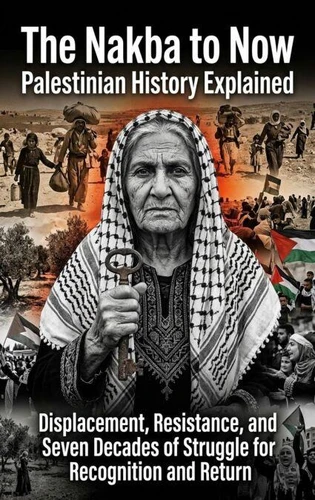
The Nakba to Now: Palestinian History Explained. Displacement, Resistance, and Seven Decades of Struggle for Recognition and Return
Par :Formats :
Disponible dans votre compte client Decitre ou Furet du Nord dès validation de votre commande. Le format ePub est :
- Compatible avec une lecture sur My Vivlio (smartphone, tablette, ordinateur)
- Compatible avec une lecture sur liseuses Vivlio
- Pour les liseuses autres que Vivlio, vous devez utiliser le logiciel Adobe Digital Edition. Non compatible avec la lecture sur les liseuses Kindle, Remarkable et Sony
 , qui est-ce ?
Notre partenaire de plateforme de lecture numérique où vous retrouverez l'ensemble de vos ebooks gratuitement
Pour en savoir plus sur nos ebooks, consultez notre aide en ligne ici
C'est si simple ! Lisez votre ebook avec l'app Vivlio sur votre tablette, mobile ou ordinateur :

- Nombre de pages262
- FormatePub
- ISBN978-3-565-31979-4
- EAN9783565319794
- Date de parution13/03/2026
- Protection num.pas de protection
- Taille1 Mo
- Infos supplémentairesepub
- ÉditeurEmphaloz Publishing House
Résumé
In 1948, approximately 700, 000 Palestinians fled or were expelled from their homes during the war that established the State of Israel. Palestinians call it the Nakba-the catastrophe. That single event, and the political forces that produced it, remains the unresolved center of one of the world's most documented and most misunderstood conflicts.
This book traces Palestinian history from the late Ottoman period through the British Mandate, the 1948 and 1967 wars, the Oslo Accords, the rise of Hamas, the blockade of Gaza, and the escalation of 2023-2024.
It draws on UN archives, Palestinian oral histories, Israeli state documents, and decades of academic scholarship to construct a chronologically coherent account of how a people moved from majority to refugee, from political movement to fractured authority. The aim is clarity without simplification-acknowledging competing historical narratives while remaining anchored in documented evidence, demographic data, and the lived testimony of those most directly affected.
For readers seeking a serious foundation for understanding contemporary events, this book provides essential historical grounding.
It draws on UN archives, Palestinian oral histories, Israeli state documents, and decades of academic scholarship to construct a chronologically coherent account of how a people moved from majority to refugee, from political movement to fractured authority. The aim is clarity without simplification-acknowledging competing historical narratives while remaining anchored in documented evidence, demographic data, and the lived testimony of those most directly affected.
For readers seeking a serious foundation for understanding contemporary events, this book provides essential historical grounding.