Author of English-language books on personal growth, business strategy, and historical insights. With a focus on practical wisdom from the past and present, Alex helps readers unlock their potential through transformative ideas.
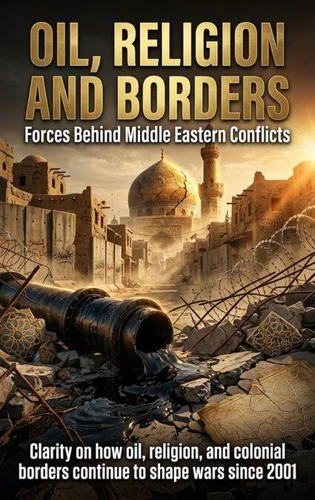
Oil, Religion and Borders: Forces Behind Middle Eastern Conflicts. Clarity on how oil, religion, and colonial borders continue to shape wars since 2001
Par :Formats :
Disponible dans votre compte client Decitre ou Furet du Nord dès validation de votre commande. Le format ePub est :
- Compatible avec une lecture sur My Vivlio (smartphone, tablette, ordinateur)
- Compatible avec une lecture sur liseuses Vivlio
- Pour les liseuses autres que Vivlio, vous devez utiliser le logiciel Adobe Digital Edition. Non compatible avec la lecture sur les liseuses Kindle, Remarkable et Sony
 , qui est-ce ?
Notre partenaire de plateforme de lecture numérique où vous retrouverez l'ensemble de vos ebooks gratuitement
Pour en savoir plus sur nos ebooks, consultez notre aide en ligne ici
C'est si simple ! Lisez votre ebook avec l'app Vivlio sur votre tablette, mobile ou ordinateur :

- Nombre de pages174
- FormatePub
- ISBN978-3-565-37107-5
- EAN9783565371075
- Date de parution30/03/2026
- Protection num.pas de protection
- Taille2 Mo
- Infos supplémentairesepub
- ÉditeurEmphaloz Publishing House
Résumé
Since 2001, every major conflict in the Middle East has been told in simplified terms-"terrorism, " "sectarian war, " "clash of civilizations"-yet the real drivers cut deeper into oil politics, sacred geography, and borders drawn by colonial powers. This book untangles how oil-rich rents, contested holy sites, and artificial state lines have overlapped with local grievances, religious narratives, and foreign interventions to ignite and prolong wars from Iraq and Syria to Yemen and Gaza.
Through accessible historical narrative and frontline-style documentary detail, it traces the journey from the discovery of oil and the 1916 Sykes-Picot line to the War on Terror, the Arab uprisings, and the militarised sectarian discourses of today.
It shows how leaders appeal to religion, how oil-funded states bankroll rival factions, and how borders that ignored tribes and sects turned into fault lines rather than frontiers. The aim is not to reduce complex conflicts to three words, but to reveal the layered forces that keep the region on edge.
It shows how leaders appeal to religion, how oil-funded states bankroll rival factions, and how borders that ignored tribes and sects turned into fault lines rather than frontiers. The aim is not to reduce complex conflicts to three words, but to reveal the layered forces that keep the region on edge.