SOLDES
Jusqu'à -70% sur une sélection d'articles*

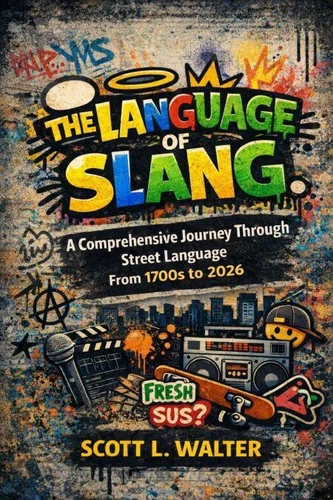
THE LANGUAGE OF SLANG A Comprehensive Journey Through Street Language From 1700s to 2026 Complete Etymological Analysis Alphabetically Organized • Culturally Contextualized Authentic and Detailed
Par :Formats :
Disponible dans votre compte client Decitre ou Furet du Nord dès validation de votre commande. Le format ePub est :
- Compatible avec une lecture sur My Vivlio (smartphone, tablette, ordinateur)
- Compatible avec une lecture sur liseuses Vivlio
- Pour les liseuses autres que Vivlio, vous devez utiliser le logiciel Adobe Digital Edition. Non compatible avec la lecture sur les liseuses Kindle, Remarkable et Sony
 , qui est-ce ?
Notre partenaire de plateforme de lecture numérique où vous retrouverez l'ensemble de vos ebooks gratuitement
Pour en savoir plus sur nos ebooks, consultez notre aide en ligne ici
C'est si simple ! Lisez votre ebook avec l'app Vivlio sur votre tablette, mobile ou ordinateur :

- FormatePub
- ISBN8995520672
- EAN9798995520672
- Date de parution01/04/2026
- Protection num.pas de protection
- Infos supplémentairesepub
- ÉditeurA PRECISER
Résumé
Every generation thinks it invented cool. It didn't."Swag" started as 18th-century thieves' cant for stolen goods. "Cool" originated in Black American culture as coded resistance language under oppression. "Bamboozle" appeared in print in 1703. "Crib" was a criminal underworld term for a safe house three centuries before MTV made it a punchline. "Snitch" has meant informer since the 1700s. "Lit" is ancient.
"Groovy" is a fossil. Even "okay" came from somewhere. The Language of Slang traces over 500 authentic terms from the 1700s to 2026 - organized chronologically and alphabetically, each entry providing detailed etymology, cultural context, evolution over time, and current usage status. This is the complete record of language's most creative, volatile, and deliberately rebellious dimension. The journey moves through ten distinct eras: the criminal cant of 18th-century London, where thieves developed secret vocabularies to exclude outsiders.
The frontier and industrial slang of the 1800s. The Jazz Age, where Black American innovation transformed the English language permanently. The Depression and WWII years. The cool cats and counterculture of the 1950s and 60s. Hip-hop's birth and the MTV generation. Grunge and the early internet. The millennium. Viral slang and meme culture. And finally the TikTok era and Gen Z, where a term coined on a Tuesday can achieve global recognition by Friday.
Slang is not trivial. It is how marginalized communities resist dominant culture. It is how generations assert identity against authority. It is how subcultural boundaries get drawn and redrawn. Every time advertisers and parents adopt a slang term and drain it of authenticity, originating communities invent new ones - an endless, creative act of linguistic self-definition stretching across three centuries.
The history of slang is the history of who had power, who resisted it, and what language looked like in the hands of people who had nothing to lose by breaking the rules. Five hundred words. Three hundred years. The living, rebellious, endlessly inventive underside of the English language.
"Groovy" is a fossil. Even "okay" came from somewhere. The Language of Slang traces over 500 authentic terms from the 1700s to 2026 - organized chronologically and alphabetically, each entry providing detailed etymology, cultural context, evolution over time, and current usage status. This is the complete record of language's most creative, volatile, and deliberately rebellious dimension. The journey moves through ten distinct eras: the criminal cant of 18th-century London, where thieves developed secret vocabularies to exclude outsiders.
The frontier and industrial slang of the 1800s. The Jazz Age, where Black American innovation transformed the English language permanently. The Depression and WWII years. The cool cats and counterculture of the 1950s and 60s. Hip-hop's birth and the MTV generation. Grunge and the early internet. The millennium. Viral slang and meme culture. And finally the TikTok era and Gen Z, where a term coined on a Tuesday can achieve global recognition by Friday.
Slang is not trivial. It is how marginalized communities resist dominant culture. It is how generations assert identity against authority. It is how subcultural boundaries get drawn and redrawn. Every time advertisers and parents adopt a slang term and drain it of authenticity, originating communities invent new ones - an endless, creative act of linguistic self-definition stretching across three centuries.
The history of slang is the history of who had power, who resisted it, and what language looked like in the hands of people who had nothing to lose by breaking the rules. Five hundred words. Three hundred years. The living, rebellious, endlessly inventive underside of the English language.