SOLDES
Jusqu'à -70% sur une sélection d'articles*
Dernière sortie
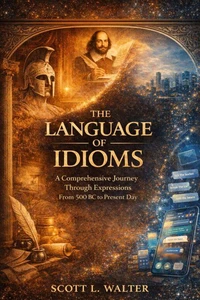
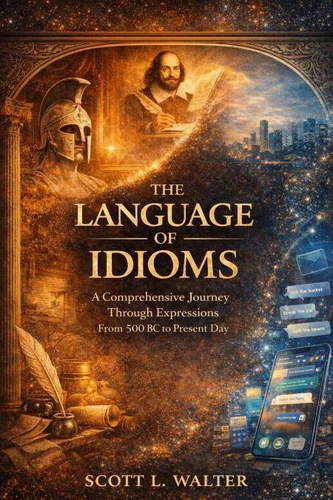
THE LANGUAGE OF IDIOMS A Comprehensive Journey Through Expressions From 500 BC to Present Day ◆ ◆ ◆ Complete Etymological Analysis Alphabetically Indexed • Historically Researched
Every language has them. Expressions that make no literal sense whatsoever - yet every native speaker understands them instantly."It's raining cats and dogs." "Kick the bucket." "Spill the beans." "Break the ice." "Don't throw the baby out with the bathwater."These phrases are not accidents of language. They are fossils - linguistic artifacts preserving centuries of human history, forgotten occupations, obsolete practices, and the accumulated wisdom of countless generations compressed into a handful of memorable words.
Sailors gave us "three sheets to the wind" and "taken aback." Farmers gave us "don't count your chickens." Victorians gave us "saved by the bell." Greek mythology gave us "Achilles' heel." Every idiom has a story. Most people have never heard it. The Language of Idioms traces 1, 000 expressions from 500 BC to the present day, examining each one in full depth. Every entry provides the modern meaning, the precise historical origin with dates and sources, its evolution across centuries and cultures, and a detailed explanation of why it persists in contemporary speech.
Organized alphabetically for easy reference, this is both a book to read cover to cover and a reference to return to for years. The scope spans the complete arc of English idiomatic expression - from ancient Greek and Roman sources through medieval nautical terminology, agricultural metaphors, Shakespeare's extraordinary contributions, and the digital coinages of the present day. "Go viral." "Break the internet." "Ghosting." These too have origins worth understanding, and this volume traces them alongside expressions that have survived two and a half millennia.
Idioms are the linguistic fingerprints of culture. They reveal what societies have valued, feared, celebrated, and found absurd across twenty-five centuries of human experience. They are also, for language learners and native speakers alike, among the richest and most rewarding territories in any language. You already use dozens of these expressions every day. Now find out where they came from.
Sailors gave us "three sheets to the wind" and "taken aback." Farmers gave us "don't count your chickens." Victorians gave us "saved by the bell." Greek mythology gave us "Achilles' heel." Every idiom has a story. Most people have never heard it. The Language of Idioms traces 1, 000 expressions from 500 BC to the present day, examining each one in full depth. Every entry provides the modern meaning, the precise historical origin with dates and sources, its evolution across centuries and cultures, and a detailed explanation of why it persists in contemporary speech.
Organized alphabetically for easy reference, this is both a book to read cover to cover and a reference to return to for years. The scope spans the complete arc of English idiomatic expression - from ancient Greek and Roman sources through medieval nautical terminology, agricultural metaphors, Shakespeare's extraordinary contributions, and the digital coinages of the present day. "Go viral." "Break the internet." "Ghosting." These too have origins worth understanding, and this volume traces them alongside expressions that have survived two and a half millennia.
Idioms are the linguistic fingerprints of culture. They reveal what societies have valued, feared, celebrated, and found absurd across twenty-five centuries of human experience. They are also, for language learners and native speakers alike, among the richest and most rewarding territories in any language. You already use dozens of these expressions every day. Now find out where they came from.