SOLDES
Jusqu'à -70% sur une sélection d'articles*

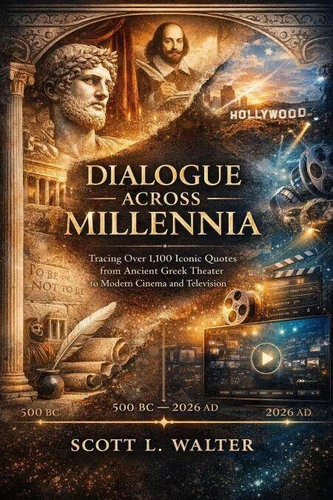
DIALOGUE ACROSS MILLENNIA A Comprehensive Historical Reference Tracing Over 1,100 Iconic Quotes from Ancient Greek Theater to Modern Cinema and Television 500 BC – 2026 AD
Par :Formats :
Disponible dans votre compte client Decitre ou Furet du Nord dès validation de votre commande. Le format ePub est :
- Compatible avec une lecture sur My Vivlio (smartphone, tablette, ordinateur)
- Compatible avec une lecture sur liseuses Vivlio
- Pour les liseuses autres que Vivlio, vous devez utiliser le logiciel Adobe Digital Edition. Non compatible avec la lecture sur les liseuses Kindle, Remarkable et Sony
 , qui est-ce ?
Notre partenaire de plateforme de lecture numérique où vous retrouverez l'ensemble de vos ebooks gratuitement
Pour en savoir plus sur nos ebooks, consultez notre aide en ligne ici
C'est si simple ! Lisez votre ebook avec l'app Vivlio sur votre tablette, mobile ou ordinateur :

- FormatePub
- ISBN8995520658
- EAN9798995520658
- Date de parution31/03/2026
- Protection num.pas de protection
- Infos supplémentairesepub
- ÉditeurA PRECISER
Résumé
"To be or not to be." "Here's looking at you, kid." "You can't handle the truth." "Winter is coming."You know these lines. You've used them. You may not remember where they came from - but they came from somewhere specific: a stage, a screen, a character in a precise dramatic moment when language achieved something so exact that it escaped its original context and entered the permanent vocabulary of human experience.
Dialogue Across Millennia traces over 1, 100 of those moments across twenty-five centuries of dramatic art - from the marble amphitheaters of ancient Athens to the streaming platforms of 2026. The journey begins with Sophocles, whose chorus warned that no man should be counted happy until he is dead, and ends with the present day. Between those two points lies the full sweep of theatrical and cinematic history: Greek tragedy and Roman comedy, Shakespeare's unprecedented density of extractable wisdom, Molière's savage social observation, Wilde's weaponized wit, Ibsen's domestic demolitions, and the golden age of Hollywood where Humphrey Bogart improvised a line between takes that would outlast the century.
Then television - which gave audiences something theater and cinema never could: years of daily intimacy with the same characters, until their catchphrases became indistinguishable from the fabric of daily life. Every entry provides four elements: the Source, the Creator, the Context - situating the line within its dramatic and emotional significance - and Modern Usage, tracing exactly how the line traveled from its original moment into contemporary speech.
The patterns that emerge are revelatory. The same themes recur across twenty-five centuries: the instability of fortune, the corruption of power, the absurdity of mortality, the consolations of love. Different eras, different technologies, different audiences - the same fundamental human need for language equal to experience. This is the dialogue that would not end. From Sophocles to Seinfeld, from the Chorus of Antigone to the writers' room of Breaking Bad - twenty-five centuries of human beings finding, in dramatic language, the words they couldn't find for themselves.
Dialogue Across Millennia traces over 1, 100 of those moments across twenty-five centuries of dramatic art - from the marble amphitheaters of ancient Athens to the streaming platforms of 2026. The journey begins with Sophocles, whose chorus warned that no man should be counted happy until he is dead, and ends with the present day. Between those two points lies the full sweep of theatrical and cinematic history: Greek tragedy and Roman comedy, Shakespeare's unprecedented density of extractable wisdom, Molière's savage social observation, Wilde's weaponized wit, Ibsen's domestic demolitions, and the golden age of Hollywood where Humphrey Bogart improvised a line between takes that would outlast the century.
Then television - which gave audiences something theater and cinema never could: years of daily intimacy with the same characters, until their catchphrases became indistinguishable from the fabric of daily life. Every entry provides four elements: the Source, the Creator, the Context - situating the line within its dramatic and emotional significance - and Modern Usage, tracing exactly how the line traveled from its original moment into contemporary speech.
The patterns that emerge are revelatory. The same themes recur across twenty-five centuries: the instability of fortune, the corruption of power, the absurdity of mortality, the consolations of love. Different eras, different technologies, different audiences - the same fundamental human need for language equal to experience. This is the dialogue that would not end. From Sophocles to Seinfeld, from the Chorus of Antigone to the writers' room of Breaking Bad - twenty-five centuries of human beings finding, in dramatic language, the words they couldn't find for themselves.