SOLDES
Jusqu'à -70% sur une sélection d'articles*

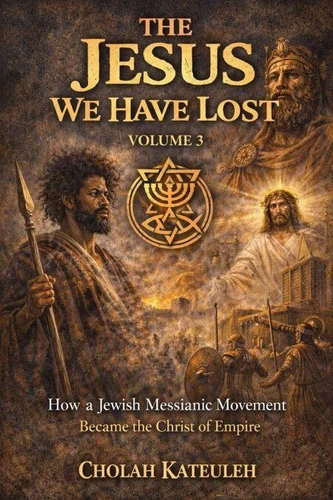
The Jesus we Have Lost: How a Jewish Messianic Movement Became the Christ of Empire. Jesus Uncovered, #3
Par :Formats :
Disponible dans votre compte client Decitre ou Furet du Nord dès validation de votre commande. Le format ePub est :
- Compatible avec une lecture sur My Vivlio (smartphone, tablette, ordinateur)
- Compatible avec une lecture sur liseuses Vivlio
- Pour les liseuses autres que Vivlio, vous devez utiliser le logiciel Adobe Digital Edition. Non compatible avec la lecture sur les liseuses Kindle, Remarkable et Sony
 , qui est-ce ?
Notre partenaire de plateforme de lecture numérique où vous retrouverez l'ensemble de vos ebooks gratuitement
Pour en savoir plus sur nos ebooks, consultez notre aide en ligne ici
C'est si simple ! Lisez votre ebook avec l'app Vivlio sur votre tablette, mobile ou ordinateur :

- FormatePub
- ISBN8233283024
- EAN9798233283024
- Date de parution18/12/2025
- Protection num.pas de protection
- Infos supplémentairesepub
- ÉditeurLinda Balsamo
Résumé
Who was Jesus before empire domesticated his memory and theology stripped his struggle of meaning?Volume Three of The Jesus We Have Lost reclaims Jesus as a freedom fighter-a revolutionary figure emerging from a colonized people resisting imperial domination. Read through an Afrocentric and decolonial lens, this volume situates Jesus within the long history of oppressed communities confronting empire, land dispossession, and racialized violence.
Roman Judea is treated not as a neutral biblical backdrop but as a colonial battleground, where crucifixion functioned as a public weapon against resistance leaders-much like the terror tactics later deployed against African and Indigenous freedom movements. Drawing on Second Temple Jewish resistance, Zealot ideology, Roman counter-insurgency, and suppressed historical evidence, this book argues that Jesus was executed not for theology, but for threat-labeled "King of the Jews" in the same way colonized leaders have always been criminalized by empire.
His later transformation into a pacified, obedient Christ mirrors a familiar imperial strategy: turn revolutionary memory into spiritual submission. This volume places Jesus alongside the global tradition of freedom fighters-from ancient Judea to Africa and the Black diaspora-whose struggles were rewritten, sanitized, or erased by colonial power. It is not a devotional work, but an act of historical and spiritual reclamation.
This book is for readers seeking a decolonized Jesus-one whose life speaks not to obedience, but to resistance, dignity, and liberation.
Roman Judea is treated not as a neutral biblical backdrop but as a colonial battleground, where crucifixion functioned as a public weapon against resistance leaders-much like the terror tactics later deployed against African and Indigenous freedom movements. Drawing on Second Temple Jewish resistance, Zealot ideology, Roman counter-insurgency, and suppressed historical evidence, this book argues that Jesus was executed not for theology, but for threat-labeled "King of the Jews" in the same way colonized leaders have always been criminalized by empire.
His later transformation into a pacified, obedient Christ mirrors a familiar imperial strategy: turn revolutionary memory into spiritual submission. This volume places Jesus alongside the global tradition of freedom fighters-from ancient Judea to Africa and the Black diaspora-whose struggles were rewritten, sanitized, or erased by colonial power. It is not a devotional work, but an act of historical and spiritual reclamation.
This book is for readers seeking a decolonized Jesus-one whose life speaks not to obedience, but to resistance, dignity, and liberation.