SOLDES
Jusqu'à -70% sur une sélection d'articles*
- Accueil /
- Cholah Kateuleh
Cholah Kateuleh

Dernière sortie
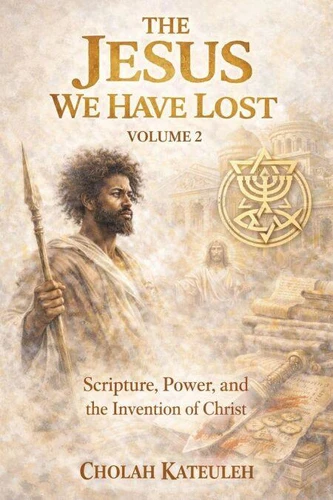
The Jesus we Have Lost: Scripture, Power, and the Invention of Christ
Volume One of The Jesus We Have Lost challenged the inherited image of Jesus by returning him to his historical and political world, exposing the gap between the man of history and the Christ of faith. Volume Two takes the investigation deeper-away from Jesus himself and into the construction of Scripture. This book examines the Bible not as a seamless divine revelation, but as a humanly assembled body of texts-written, edited, revised, and stabilized under theological and political pressures.
It asks not whether Scripture is sacred, but how it became what it is, and whose interests were served in that process. At the center of this inquiry is a distinction long blurred: Jesus, a first-century Jewish figure rooted in a volatile colonial context, and Christ, a theological identity progressively shaped by emerging orthodoxy. This volume argues that the Gospels themselves became the primary instrument of this transformation-through selection, omission, harmonization, and doctrinal revision.
By exposing contradictions, interpolations, narrative gaps, and competing voices within Scripture, this book reveals the Bible as a contested archive rather than a flawless monolith. Prophecy, passion, resurrection, sacrifice, and redemption are re-examined not as timeless certainties, but as theological constructions forged from historical ambiguity. This volume does not call for the abandonment of faith-but for the end of uncritical reading.
If Volume One recovered the lost Jesus, Volume Two exposes the textual architecture that concealed him.
It asks not whether Scripture is sacred, but how it became what it is, and whose interests were served in that process. At the center of this inquiry is a distinction long blurred: Jesus, a first-century Jewish figure rooted in a volatile colonial context, and Christ, a theological identity progressively shaped by emerging orthodoxy. This volume argues that the Gospels themselves became the primary instrument of this transformation-through selection, omission, harmonization, and doctrinal revision.
By exposing contradictions, interpolations, narrative gaps, and competing voices within Scripture, this book reveals the Bible as a contested archive rather than a flawless monolith. Prophecy, passion, resurrection, sacrifice, and redemption are re-examined not as timeless certainties, but as theological constructions forged from historical ambiguity. This volume does not call for the abandonment of faith-but for the end of uncritical reading.
If Volume One recovered the lost Jesus, Volume Two exposes the textual architecture that concealed him.
Volume One of The Jesus We Have Lost challenged the inherited image of Jesus by returning him to his historical and political world, exposing the gap between the man of history and the Christ of faith. Volume Two takes the investigation deeper-away from Jesus himself and into the construction of Scripture. This book examines the Bible not as a seamless divine revelation, but as a humanly assembled body of texts-written, edited, revised, and stabilized under theological and political pressures.
It asks not whether Scripture is sacred, but how it became what it is, and whose interests were served in that process. At the center of this inquiry is a distinction long blurred: Jesus, a first-century Jewish figure rooted in a volatile colonial context, and Christ, a theological identity progressively shaped by emerging orthodoxy. This volume argues that the Gospels themselves became the primary instrument of this transformation-through selection, omission, harmonization, and doctrinal revision.
By exposing contradictions, interpolations, narrative gaps, and competing voices within Scripture, this book reveals the Bible as a contested archive rather than a flawless monolith. Prophecy, passion, resurrection, sacrifice, and redemption are re-examined not as timeless certainties, but as theological constructions forged from historical ambiguity. This volume does not call for the abandonment of faith-but for the end of uncritical reading.
If Volume One recovered the lost Jesus, Volume Two exposes the textual architecture that concealed him.
It asks not whether Scripture is sacred, but how it became what it is, and whose interests were served in that process. At the center of this inquiry is a distinction long blurred: Jesus, a first-century Jewish figure rooted in a volatile colonial context, and Christ, a theological identity progressively shaped by emerging orthodoxy. This volume argues that the Gospels themselves became the primary instrument of this transformation-through selection, omission, harmonization, and doctrinal revision.
By exposing contradictions, interpolations, narrative gaps, and competing voices within Scripture, this book reveals the Bible as a contested archive rather than a flawless monolith. Prophecy, passion, resurrection, sacrifice, and redemption are re-examined not as timeless certainties, but as theological constructions forged from historical ambiguity. This volume does not call for the abandonment of faith-but for the end of uncritical reading.
If Volume One recovered the lost Jesus, Volume Two exposes the textual architecture that concealed him.
Les livres de Cholah Kateuleh

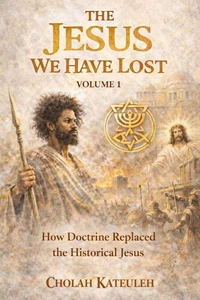
The Jesus we Have Lost: How Doctrine Replaced the Historical Jesus. Jesus Uncovered, #1
Cholah Kateuleh
E-book
5,49 €

5,49 €
