SOLDES
Jusqu'à -70% sur une sélection d'articles*

Nouveauté
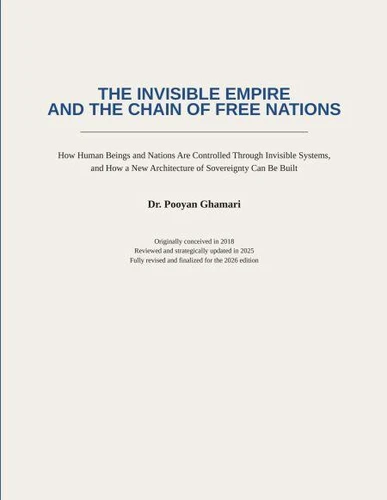
THE INVISIBLE EMPIRE AND THE CHAIN OF FREE NATIONS. How Human Beings and Nations Are Controlled Through Invisible Systems, and How a New Architecture of Sovereignty Can Be Built
Par :Formats :
Disponible dans votre compte client Decitre ou Furet du Nord dès validation de votre commande. Le format ePub est :
- Compatible avec une lecture sur My Vivlio (smartphone, tablette, ordinateur)
- Compatible avec une lecture sur liseuses Vivlio
- Pour les liseuses autres que Vivlio, vous devez utiliser le logiciel Adobe Digital Edition. Non compatible avec la lecture sur les liseuses Kindle, Remarkable et Sony
 , qui est-ce ?
Notre partenaire de plateforme de lecture numérique où vous retrouverez l'ensemble de vos ebooks gratuitement
Pour en savoir plus sur nos ebooks, consultez notre aide en ligne ici
C'est si simple ! Lisez votre ebook avec l'app Vivlio sur votre tablette, mobile ou ordinateur :

- Nombre de pages102
- FormatePub
- ISBN978-3-6963-1837-6
- EAN9783696318376
- Date de parution28/05/2026
- Protection num.Digital Watermarking
- Taille200 Ko
- Infos supplémentairesepub
- ÉditeurBoD - Books on Demand
Résumé
The Invisible Empire and the Chain of Free Nations is a work of strategic analysis, historical interpretation, and philosophical argument by Dr. Pooyan Ghamari. It examines how modern domination increasingly operates through invisible systems rather than visible force alone: standards, finance, sanctions, logistics, compliance, narrative control, and technological dependency.
Moving from the governable individual to the governable nation, the book explores how inner weakness, institutional dependency, and global systems of permission shape the modern political condition.
At the same time, it argues that sovereignty is not lost forever. What has been built can be studied, mapped, and answered through lawful clarity, structural intelligence, and patient reconstruction. Written for serious readers who are tired of both fantasy and sedation, this book offers a framework for understanding hidden power and for rebuilding freer individuals, stronger institutions, and more sovereign nations. That description is faithful to your preface and introduction, which frame the book as a study of invisible systems of power, lawful sovereignty, and the long construction of alternatives.
At the same time, it argues that sovereignty is not lost forever. What has been built can be studied, mapped, and answered through lawful clarity, structural intelligence, and patient reconstruction. Written for serious readers who are tired of both fantasy and sedation, this book offers a framework for understanding hidden power and for rebuilding freer individuals, stronger institutions, and more sovereign nations. That description is faithful to your preface and introduction, which frame the book as a study of invisible systems of power, lawful sovereignty, and the long construction of alternatives.
A propos de Pooyan Ghamari


9,99 €