SOLDES
Jusqu'à -70% sur une sélection d'articles*

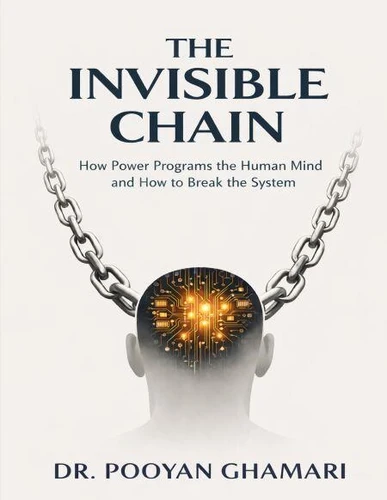
The Invisible Chain. How Power Programs the Human Mind and How to Break the System
Par :Formats :
Disponible dans votre compte client Decitre ou Furet du Nord dès validation de votre commande. Le format ePub est :
- Compatible avec une lecture sur My Vivlio (smartphone, tablette, ordinateur)
- Compatible avec une lecture sur liseuses Vivlio
- Pour les liseuses autres que Vivlio, vous devez utiliser le logiciel Adobe Digital Edition. Non compatible avec la lecture sur les liseuses Kindle, Remarkable et Sony
 , qui est-ce ?
Notre partenaire de plateforme de lecture numérique où vous retrouverez l'ensemble de vos ebooks gratuitement
Pour en savoir plus sur nos ebooks, consultez notre aide en ligne ici
C'est si simple ! Lisez votre ebook avec l'app Vivlio sur votre tablette, mobile ou ordinateur :

- Nombre de pages82
- FormatePub
- ISBN978-3-6963-2631-9
- EAN9783696326319
- Date de parution08/05/2026
- Protection num.Digital Watermarking
- Taille361 Ko
- Infos supplémentairesepub
- ÉditeurBoD - Books on Demand
Résumé
The Invisible Chain is a nonfiction book about how power shapes human reality through narrative, debt, media, institutions, surveillance systems, digital platforms, and algorithmic control. It traces the evolution of organized power from early civilizations to contemporary systems of behavioral prediction, showing how modern control operates not only through force but through the design of perception, identity, and possibility itself.
This revised and updated 2026 edition expands the original 2021 work with new analysis of AI deployment, sanctions regimes, geopolitical instability, narrative warfare, and the architecture of synthetic reality.
The book examines what these systems do to attention, trust, memory, dignity, and freedom, and asks what kinds of sovereignty remain possible in a world increasingly shaped by predictive systems and managed dependence. Combining political analysis, media critique, social philosophy, and technological reflection, The Invisible Chain is written for readers interested in power, systems, digital society, modern governance, and the future of human autonomy.
The final chapters move beyond diagnosis toward reconstruction, outlining what sovereign minds, sovereign communities, and sovereign institutions might look like in practice.
The book examines what these systems do to attention, trust, memory, dignity, and freedom, and asks what kinds of sovereignty remain possible in a world increasingly shaped by predictive systems and managed dependence. Combining political analysis, media critique, social philosophy, and technological reflection, The Invisible Chain is written for readers interested in power, systems, digital society, modern governance, and the future of human autonomy.
The final chapters move beyond diagnosis toward reconstruction, outlining what sovereign minds, sovereign communities, and sovereign institutions might look like in practice.
A propos de Pooyan Ghamari


9,99 €