SOLDES
Jusqu'à -70% sur une sélection d'articles*

Nouveauté
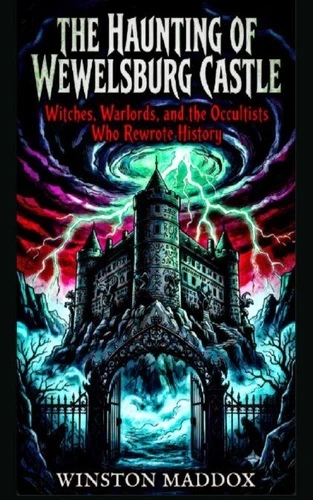
The Haunting of Wewelsburg Castle: Witches, Warlords, and the Occultists Who Rewrote History
Par :Formats :
Disponible dans votre compte client Decitre ou Furet du Nord dès validation de votre commande. Le format ePub est :
- Compatible avec une lecture sur My Vivlio (smartphone, tablette, ordinateur)
- Compatible avec une lecture sur liseuses Vivlio
- Pour les liseuses autres que Vivlio, vous devez utiliser le logiciel Adobe Digital Edition. Non compatible avec la lecture sur les liseuses Kindle, Remarkable et Sony
 , qui est-ce ?
Notre partenaire de plateforme de lecture numérique où vous retrouverez l'ensemble de vos ebooks gratuitement
Pour en savoir plus sur nos ebooks, consultez notre aide en ligne ici
C'est si simple ! Lisez votre ebook avec l'app Vivlio sur votre tablette, mobile ou ordinateur :

- FormatePub
- ISBN8235004573
- EAN9798235004573
- Date de parution23/06/2026
- Protection num.pas de protection
- Infos supplémentairesepub
- ÉditeurIoakim Ioakim
Résumé
When you close your eyes and picture the architectural landscape of history, do you see the pristine monuments preserved in textbooks, or do you smell the damp stone, the iron, and the cold smoke of the places where humanity's darkest impulses took physical form?Most narratives of Central Europe treat history like a clean timeline of neatly separated eras. They give you the medieval prince-bishops in one chapter, the early modern witch trials in another, and the systemic horrors of the mid-20th century in a distant volume.
But history does not clean up after itself; it piles layer upon agonizing layer within the exact same boundaries of stone. The Haunting of Wewelsburg Castle: Witches, Warlords, and the Occultists Who Rewrote History by Winston Maddox is an unsparing, meticulously researched chronicle engineered specifically for the seasoned historian who demands substance over sensationalism, and archival reality over generic mythologizing.
This work tracks the literal and psychological topography of Germany's unique triangular fortress-a structure that acted as a focal point for regional sovereignty, religious bloodletting, and ultimately, the administrative core of state-sponsored mysticism. You will not find lazy retellings of pop-culture ghost stories here. Instead, you will stand inside the 17th-century administrative courts of Prince-Bishop Dietrich von Fürstenberg, analyzing how an elite class leveraged a manufactured panic to execute dozens of citizens for witchcraft within the castle's shadow.
You will trace the architectural evolutions forced upon the stone by the brutal incursions of the Thirty Years' War, understanding how physical fortresses adapt to survive geopolitical shifts. Most crucially, this volume tears down the sensationalized "Hollywood occultism" of the SS to expose something far more terrifying: the cold, bureaucratic reality of how Heinrich Himmler and his mystic-in-residence, Karl Maria Wiligut, weaponized regional folklore and Völkisch romanticism to transform a ruined Prussian landmark into the spiritual axis mundi of an empire built on slave labor.
Through painstaking reference to original trial transcripts, architectural blueprints by Hermann Bartels, and the grim records of the adjacent Niederhagen concentration camp, Maddox reconstructs Wewelsburg not as a detached curiosity, but as a living warnings-sign of ideological radicalization. You will explore the dual nature of the infamous North Tower-examining the precise engineering of the twelve-columned Crypt and the upper hall's mosaic floor while simultaneously confronting the human cost paid in granite and blood by the prisoners worked to death just outside the gates.
This book offers a visceral, intellectually rigorous immersion into the spatial history of fanaticism, mapping out exactly how a single geographic point can be repeatedly hijacked to rewrite the human story. If the past is a foreign country, are you content to merely look at its postcards, or are you ready to walk its blood-soaked borders and feel the true, suffocating weight of its architecture?
But history does not clean up after itself; it piles layer upon agonizing layer within the exact same boundaries of stone. The Haunting of Wewelsburg Castle: Witches, Warlords, and the Occultists Who Rewrote History by Winston Maddox is an unsparing, meticulously researched chronicle engineered specifically for the seasoned historian who demands substance over sensationalism, and archival reality over generic mythologizing.
This work tracks the literal and psychological topography of Germany's unique triangular fortress-a structure that acted as a focal point for regional sovereignty, religious bloodletting, and ultimately, the administrative core of state-sponsored mysticism. You will not find lazy retellings of pop-culture ghost stories here. Instead, you will stand inside the 17th-century administrative courts of Prince-Bishop Dietrich von Fürstenberg, analyzing how an elite class leveraged a manufactured panic to execute dozens of citizens for witchcraft within the castle's shadow.
You will trace the architectural evolutions forced upon the stone by the brutal incursions of the Thirty Years' War, understanding how physical fortresses adapt to survive geopolitical shifts. Most crucially, this volume tears down the sensationalized "Hollywood occultism" of the SS to expose something far more terrifying: the cold, bureaucratic reality of how Heinrich Himmler and his mystic-in-residence, Karl Maria Wiligut, weaponized regional folklore and Völkisch romanticism to transform a ruined Prussian landmark into the spiritual axis mundi of an empire built on slave labor.
Through painstaking reference to original trial transcripts, architectural blueprints by Hermann Bartels, and the grim records of the adjacent Niederhagen concentration camp, Maddox reconstructs Wewelsburg not as a detached curiosity, but as a living warnings-sign of ideological radicalization. You will explore the dual nature of the infamous North Tower-examining the precise engineering of the twelve-columned Crypt and the upper hall's mosaic floor while simultaneously confronting the human cost paid in granite and blood by the prisoners worked to death just outside the gates.
This book offers a visceral, intellectually rigorous immersion into the spatial history of fanaticism, mapping out exactly how a single geographic point can be repeatedly hijacked to rewrite the human story. If the past is a foreign country, are you content to merely look at its postcards, or are you ready to walk its blood-soaked borders and feel the true, suffocating weight of its architecture?