Caleb Prescott is an English-language nonfiction author focused on history, economics, and political systems. His books examine the intersections of power, trade, and social change, often uncovering overlooked events and the deeper structures behind historical turning points. His writing is known for its analytical tone, strong narrative flow, and ability to connect historical patterns with the modern world.
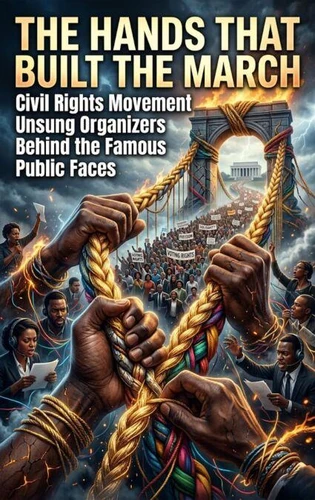
The Hands That Built the March. Civil Rights Movement Unsung Organizers Behind the Famous Public Faces
Par :Formats :
Disponible dans votre compte client Decitre ou Furet du Nord dès validation de votre commande. Le format ePub est :
- Compatible avec une lecture sur My Vivlio (smartphone, tablette, ordinateur)
- Compatible avec une lecture sur liseuses Vivlio
- Pour les liseuses autres que Vivlio, vous devez utiliser le logiciel Adobe Digital Edition. Non compatible avec la lecture sur les liseuses Kindle, Remarkable et Sony
 , qui est-ce ?
Notre partenaire de plateforme de lecture numérique où vous retrouverez l'ensemble de vos ebooks gratuitement
Pour en savoir plus sur nos ebooks, consultez notre aide en ligne ici
C'est si simple ! Lisez votre ebook avec l'app Vivlio sur votre tablette, mobile ou ordinateur :

- Nombre de pages151
- FormatePub
- ISBN978-3-565-46464-7
- EAN9783565464647
- Date de parution28/05/2026
- Protection num.pas de protection
- Taille2 Mo
- Infos supplémentairesepub
- ÉditeurEmphaloz Publishing House
Résumé
This book shifts the spotlight from the iconic leaders of the Civil Rights Movement to the often-overlooked organizers-field secretaries, local coordinators, women's-club strategists, and student-committee architects-who turned boycotts, sit-ins, and mass marches into sustained national campaigns. It asks how the journeys of Rosa Parks, Martin Luther King Jr., and other famous figures were framed, driven, and protected by networks of activists whose names rarely appeared in headlines.
The narrative traces three key mechanisms: the everyday labor of local organizers such as Ella Baker, Bayard Rustin, Jo Ann Robinson, and local NAACP chapters, who mapped bus routes, mimeographed flyers, and rehearsed protest logistics; the quiet mentorship that turned student sit-in leaders into the Student Nonviolent Coordinating Committee (SNCC) and sent Freedom Riders into the Deep South; and the structural erasure by media and memory, which compressed complicated grassroots ecosystems into tidy portraits of individual heroes.
Drawing on oral histories, movement-organization records, and church-bulletin minutes, the book shows how the movement's real power lay in its depth-ordinary people who organized, fundraised, and risked their lives in the shadows of the microphone.
Drawing on oral histories, movement-organization records, and church-bulletin minutes, the book shows how the movement's real power lay in its depth-ordinary people who organized, fundraised, and risked their lives in the shadows of the microphone.