SOLDES
Jusqu'à -70% sur une sélection d'articles*

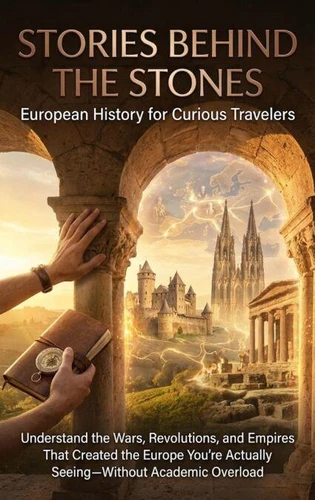
Stories Behind the Stones: European History for Curious Travelers. Understand the Wars, Revolutions, and Empires That Created the Europe You're Actually Seeing—Without Academic Overload
Par :Formats :
Disponible dans votre compte client Decitre ou Furet du Nord dès validation de votre commande. Le format ePub est :
- Compatible avec une lecture sur My Vivlio (smartphone, tablette, ordinateur)
- Compatible avec une lecture sur liseuses Vivlio
- Pour les liseuses autres que Vivlio, vous devez utiliser le logiciel Adobe Digital Edition. Non compatible avec la lecture sur les liseuses Kindle, Remarkable et Sony
 , qui est-ce ?
Notre partenaire de plateforme de lecture numérique où vous retrouverez l'ensemble de vos ebooks gratuitement
Pour en savoir plus sur nos ebooks, consultez notre aide en ligne ici
C'est si simple ! Lisez votre ebook avec l'app Vivlio sur votre tablette, mobile ou ordinateur :

- Nombre de pages203
- FormatePub
- ISBN978-3-565-15919-2
- EAN9783565159192
- Date de parution04/01/2026
- Protection num.pas de protection
- Taille1 Mo
- Infos supplémentairesepub
- ÉditeurEmphaloz Publishing House
Résumé
That castle isn't just a photo opportunity-it witnessed sieges, royal intrigue, and centuries of power struggles. This guide transforms European landmarks from tourist checkpoints into gateways for understanding the history that shaped the continent, making your travels intellectually rewarding beyond Instagram posts.
Discover history through traveler's eyes: why medieval walls surround certain cities and not others, what Gothic cathedrals reveal about religious and political power, how Roman ruins connect across the continent, why certain squares witnessed revolutions, what industrial architecture says about economic transformation, and how World War monuments mark turning points.
Learn to read landscapes for historical clues, understand architectural styles as historical documents, and recognize patterns that connect disparate sites into coherent narratives. Understand essential European historical movements: Roman expansion and collapse, medieval feudalism and Christendom, Renaissance transformation, Reformation conflicts, Enlightenment ideas, nationalist movements, industrial revolution impacts, world wars devastation, Cold War division, and European Union integration.
From recognizing Romanesque versus Gothic to understanding why borders exist where they do, identifying historical layers in modern cities to appreciating how tourism itself shapes historical presentation, you'll gain frameworks for traveling with historical awareness that enriches every destination beyond surface-level sightseeing.
Learn to read landscapes for historical clues, understand architectural styles as historical documents, and recognize patterns that connect disparate sites into coherent narratives. Understand essential European historical movements: Roman expansion and collapse, medieval feudalism and Christendom, Renaissance transformation, Reformation conflicts, Enlightenment ideas, nationalist movements, industrial revolution impacts, world wars devastation, Cold War division, and European Union integration.
From recognizing Romanesque versus Gothic to understanding why borders exist where they do, identifying historical layers in modern cities to appreciating how tourism itself shapes historical presentation, you'll gain frameworks for traveling with historical awareness that enriches every destination beyond surface-level sightseeing.