Caleb Prescott is an English-language nonfiction author focused on history, economics, and political systems. His books examine the intersections of power, trade, and social change, often uncovering overlooked events and the deeper structures behind historical turning points. His writing is known for its analytical tone, strong narrative flow, and ability to connect historical patterns with the modern world.
Nouveauté
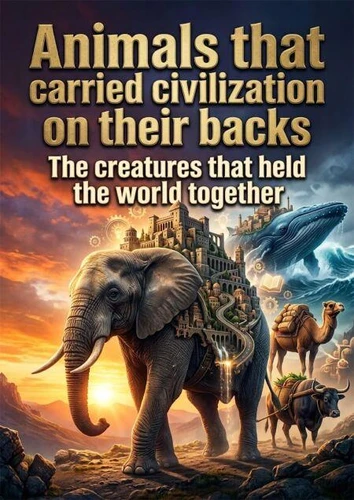
Animals that carried civilization on their backs. The creatures that held the world together
Par :Formats :
Disponible dans votre compte client Decitre ou Furet du Nord dès validation de votre commande. Le format ePub est :
- Compatible avec une lecture sur My Vivlio (smartphone, tablette, ordinateur)
- Compatible avec une lecture sur liseuses Vivlio
- Pour les liseuses autres que Vivlio, vous devez utiliser le logiciel Adobe Digital Edition. Non compatible avec la lecture sur les liseuses Kindle, Remarkable et Sony
 , qui est-ce ?
Notre partenaire de plateforme de lecture numérique où vous retrouverez l'ensemble de vos ebooks gratuitement
Pour en savoir plus sur nos ebooks, consultez notre aide en ligne ici
C'est si simple ! Lisez votre ebook avec l'app Vivlio sur votre tablette, mobile ou ordinateur :

- Nombre de pages202
- FormatePub
- ISBN978-3-565-59128-2
- EAN9783565591282
- Date de parution27/07/2026
- Protection num.pas de protection
- Taille1 Mo
- Infos supplémentairesepub
- ÉditeurEmphaloz Publishing House
Résumé
They moved armies, spread disease, and carried letters across continents long before engines existed. This book traces the hidden labor of animals in the making of human civilization, from Roman supply lines to Ottoman stables, from plague-bearing rats in medieval ports to carrier pigeons over the trenches of World War I. Without horses, the Mongols could not have conquered half the known world. Without rats, the Black Death would not have reshaped Europe's labor systems.
Without pigeons, early modern finance would have collapsed into silence. Each chapter examines a single species and the infrastructure of power, trade, or belief it enabled. The book argues that animals were not passive resources but active participants in historical change, their biological limits and behaviors steering the course of events in ways historians rarely acknowledge. From the domesticated ox that pulled the plow of medieval subsistence farming to the camel that opened trans-Saharan trade routes, the narrative restores animal agency to the center of global history.
The final section considers what this means for our understanding of civilization itself, not as a purely human achievement but as a multispecies project built on the backs of creatures rarely named in the historical record.
Without pigeons, early modern finance would have collapsed into silence. Each chapter examines a single species and the infrastructure of power, trade, or belief it enabled. The book argues that animals were not passive resources but active participants in historical change, their biological limits and behaviors steering the course of events in ways historians rarely acknowledge. From the domesticated ox that pulled the plow of medieval subsistence farming to the camel that opened trans-Saharan trade routes, the narrative restores animal agency to the center of global history.
The final section considers what this means for our understanding of civilization itself, not as a purely human achievement but as a multispecies project built on the backs of creatures rarely named in the historical record.