SOLDES
Jusqu'à -70% sur une sélection d'articles*

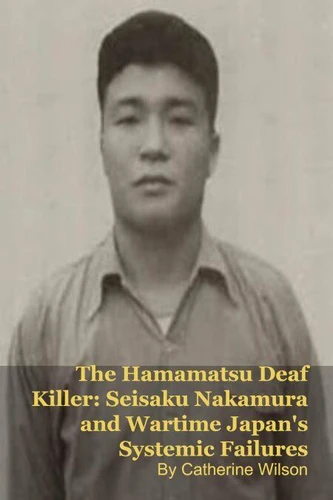
The Hamamatsu Deaf Killer: Seisaku Nakamura and Wartime Japan's Systemic Failures
Par : ,Formats :
Disponible dans votre compte client Decitre ou Furet du Nord dès validation de votre commande. Le format ePub est :
- Compatible avec une lecture sur My Vivlio (smartphone, tablette, ordinateur)
- Compatible avec une lecture sur liseuses Vivlio
- Pour les liseuses autres que Vivlio, vous devez utiliser le logiciel Adobe Digital Edition. Non compatible avec la lecture sur les liseuses Kindle, Remarkable et Sony
 , qui est-ce ?
Notre partenaire de plateforme de lecture numérique où vous retrouverez l'ensemble de vos ebooks gratuitement
Pour en savoir plus sur nos ebooks, consultez notre aide en ligne ici
C'est si simple ! Lisez votre ebook avec l'app Vivlio sur votre tablette, mobile ou ordinateur :

- FormatePub
- ISBN8233260131
- EAN9798233260131
- Date de parution15/01/2026
- Protection num.pas de protection
- Infos supplémentairesepub
- ÉditeurLinda Balsamo
Résumé
The Hamamatsu Deaf Killer: Seisaku Nakamura and Wartime Japan's Systemic FailuresIn 1938, a fourteen-year-old deaf boy named Seisaku Nakamura began a four-year killing spree that would claim at least nine lives in wartime Japan, including members of his own family. This meticulously researched historical true crime narrative examines how a mathematically gifted student at a school for the deaf transformed into a serial killer, revealing the catastrophic convergence of disability stigma, familial abuse, and state-sanctioned violence that characterized Japanese society during the Pacific War.
Drawing on police records, psychiatric evaluations, and contemporary newspaper accounts, this book traces Nakamura's trajectory from his birth in 1923 through his execution in 1944, situating his case within broader patterns of juvenile delinquency that contradicted wartime propaganda about social cohesion and moral virtue. The narrative explores how the suppression of crime reporting enabled his violence to continue, how the Wartime Criminal Special Law stripped away juvenile protections to ensure his swift execution, and how his case illuminates persistent patterns of ableism in Japanese society from the concept of spiritual pollution to the 2016 Sagamihara massacre.
This is a story about what happens when disability meets stigma rather than support, when law serves state power rather than justice, and when societies suppress uncomfortable truths about their own failures.
Drawing on police records, psychiatric evaluations, and contemporary newspaper accounts, this book traces Nakamura's trajectory from his birth in 1923 through his execution in 1944, situating his case within broader patterns of juvenile delinquency that contradicted wartime propaganda about social cohesion and moral virtue. The narrative explores how the suppression of crime reporting enabled his violence to continue, how the Wartime Criminal Special Law stripped away juvenile protections to ensure his swift execution, and how his case illuminates persistent patterns of ableism in Japanese society from the concept of spiritual pollution to the 2016 Sagamihara massacre.
This is a story about what happens when disability meets stigma rather than support, when law serves state power rather than justice, and when societies suppress uncomfortable truths about their own failures.