SOLDES
Jusqu'à -70% sur une sélection d'articles*

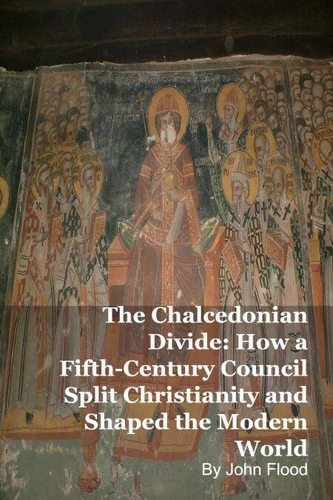
The Chalcedonian Divide: How a Fifth-Century Council Split Christianity and Shaped the Modern World
Par : ,Formats :
Disponible dans votre compte client Decitre ou Furet du Nord dès validation de votre commande. Le format ePub est :
- Compatible avec une lecture sur My Vivlio (smartphone, tablette, ordinateur)
- Compatible avec une lecture sur liseuses Vivlio
- Pour les liseuses autres que Vivlio, vous devez utiliser le logiciel Adobe Digital Edition. Non compatible avec la lecture sur les liseuses Kindle, Remarkable et Sony
 , qui est-ce ?
Notre partenaire de plateforme de lecture numérique où vous retrouverez l'ensemble de vos ebooks gratuitement
Pour en savoir plus sur nos ebooks, consultez notre aide en ligne ici
C'est si simple ! Lisez votre ebook avec l'app Vivlio sur votre tablette, mobile ou ordinateur :

- FormatePub
- ISBN8233612220
- EAN9798233612220
- Date de parution09/01/2026
- Protection num.pas de protection
- Infos supplémentairesepub
- ÉditeurLinda Balsamo
Résumé
The Chalcedonian Divide: How a Fifth-Century Council Split Christianity and Shaped the Modern WorldThe Council of Chalcedon in 451 CE was meant to unite Christianity by defining Christ's nature, but instead it triggered one of history's longest religious schisms. This comprehensive narrative explores how theological debates over whether Christ had "one nature" or "two natures" became entangled with imperial politics, cultural identity, and ecclesiastical power struggles, dividing the ancient churches of Egypt, Syria, Armenia, and Ethiopia from Constantinople and Rome for fifteen centuries.
Drawing on extensive historical sources and modern scholarship, this book traces the controversy from its roots in the rivalry between Alexandria and Antioch, through the dramatic confrontations at the Council of Ephesus, to the violent aftermath of Chalcedon that saw patriarchs murdered and churches burned. It examines how Byzantine persecution paradoxically gave way to greater religious freedom under Islamic rule, how figures like Jacob Baradaeus built parallel church hierarchies while disguised in rags, and how twentieth-century ecumenical dialogues finally revealed that the schism was based largely on linguistic misunderstanding rather than genuine theological disagreement.
This is the story of how words divided the Christian world-and how patient dialogue is finally healing wounds that lasted a millennium and a half.
Drawing on extensive historical sources and modern scholarship, this book traces the controversy from its roots in the rivalry between Alexandria and Antioch, through the dramatic confrontations at the Council of Ephesus, to the violent aftermath of Chalcedon that saw patriarchs murdered and churches burned. It examines how Byzantine persecution paradoxically gave way to greater religious freedom under Islamic rule, how figures like Jacob Baradaeus built parallel church hierarchies while disguised in rags, and how twentieth-century ecumenical dialogues finally revealed that the schism was based largely on linguistic misunderstanding rather than genuine theological disagreement.
This is the story of how words divided the Christian world-and how patient dialogue is finally healing wounds that lasted a millennium and a half.
A propos de Mark Kelly


3,49 €

Geist. Phantasia, #1
E-book
5,99 €