Sofia Lane is a nonfiction author known for writing thoughtful books on emotional resilience, self-growth, modern relationships, and finding meaning in everyday life. Her calm and reflective writing style combines psychology, philosophy, and practical insight to help readers navigate life with greater clarity, balance, and self-awareness.
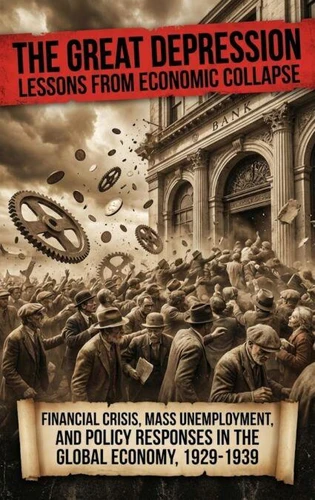
The Great Depression: Lessons From Economic Collapse. Financial Crisis, Mass Unemployment, and Policy Responses in the Global Economy, 1929-1939
Par :Formats :
Disponible dans votre compte client Decitre ou Furet du Nord dès validation de votre commande. Le format ePub est :
- Compatible avec une lecture sur My Vivlio (smartphone, tablette, ordinateur)
- Compatible avec une lecture sur liseuses Vivlio
- Pour les liseuses autres que Vivlio, vous devez utiliser le logiciel Adobe Digital Edition. Non compatible avec la lecture sur les liseuses Kindle, Remarkable et Sony
 , qui est-ce ?
Notre partenaire de plateforme de lecture numérique où vous retrouverez l'ensemble de vos ebooks gratuitement
Pour en savoir plus sur nos ebooks, consultez notre aide en ligne ici
C'est si simple ! Lisez votre ebook avec l'app Vivlio sur votre tablette, mobile ou ordinateur :

- Nombre de pages202
- FormatePub
- ISBN978-3-565-25114-8
- EAN9783565251148
- Date de parution16/02/2026
- Protection num.pas de protection
- Taille2 Mo
- Infos supplémentairesepub
- ÉditeurEmphaloz Publishing House
Résumé
The Great Depression represented capitalism's most severe crisis, devastating economies worldwide and generating unemployment, poverty, and political instability that challenged democratic governance and international cooperation. Beginning with Wall Street's 1929 crash, the depression exposed financial system vulnerabilities, triggered protectionist trade wars, and forced governments to reconsider laissez-faire orthodoxy.
This history examines how the crisis unfolded, why recovery proved so difficult, and what policy debates reveal about managing economic catastrophe. Drawing on government reports, banking records, personal testimonies, and economic data, the narrative traces the depression's cascading failures. Stock market speculation created unsustainable valuations. Bank failures destroyed savings and contracted credit.
International gold standard transmitted deflation globally while constraining monetary responses. Falling prices and wages created debt burdens and reduced purchasing power. Unemployment reached unprecedented levels-25 percent in the United States, higher in Germany. Agricultural commodity collapse devastated rural communities. Hoovervilles symbolized widespread destitution. The book explores varied national responses.
Britain abandoned gold standard early, enabling modest recovery. Germany's Weimar collapse facilitated Nazi rise. France maintained gold standard longer, prolonging stagnation. Roosevelt's New Deal experimented with unprecedented federal intervention-banking regulation, agricultural supports, public works programs, labor protections, social security. Keynesian economics challenged balanced budget orthodoxy, advocating deficit spending during downturns.
This history examines how the crisis unfolded, why recovery proved so difficult, and what policy debates reveal about managing economic catastrophe. Drawing on government reports, banking records, personal testimonies, and economic data, the narrative traces the depression's cascading failures. Stock market speculation created unsustainable valuations. Bank failures destroyed savings and contracted credit.
International gold standard transmitted deflation globally while constraining monetary responses. Falling prices and wages created debt burdens and reduced purchasing power. Unemployment reached unprecedented levels-25 percent in the United States, higher in Germany. Agricultural commodity collapse devastated rural communities. Hoovervilles symbolized widespread destitution. The book explores varied national responses.
Britain abandoned gold standard early, enabling modest recovery. Germany's Weimar collapse facilitated Nazi rise. France maintained gold standard longer, prolonging stagnation. Roosevelt's New Deal experimented with unprecedented federal intervention-banking regulation, agricultural supports, public works programs, labor protections, social security. Keynesian economics challenged balanced budget orthodoxy, advocating deficit spending during downturns.
A propos de Sofia Lane

4,49 €