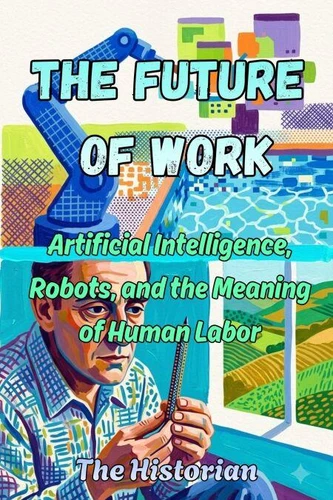
The Future of Work explores how artificial intelligence and robotics are transforming the nature of human labor in the twenty-first century. Rather than focusing solely on job loss, the book examines the deeper question of what work means in an age when machines can perform many cognitive and physical tasks once reserved for humans. It argues that while automation will replace numerous routine jobs, it will also highlight uniquely human strengths such as empathy, creativity, moral judgment, leadership, and care.
The book analyzes which professions are most vulnerable to AI, how quickly these changes may occur, and how societies can prepare for the transition. It emphasizes the growing importance of human-AI collaboration, where technology augments rather than replaces human capabilities. Topics such as universal basic income, the future of education, and emerging careers in the AI economy are also explored.
Ultimately, The Future of Work presents a balanced and thoughtful vision of technological change. It suggests that the greatest challenge is not merely economic adaptation, but redefining the purpose of work itself. The book concludes that human fulfillment, meaning, and responsibility will remain essential even in a world where intelligent machines perform much of the labor that once defined human employment.
The Future of Work explores how artificial intelligence and robotics are transforming the nature of human labor in the twenty-first century. Rather than focusing solely on job loss, the book examines the deeper question of what work means in an age when machines can perform many cognitive and physical tasks once reserved for humans. It argues that while automation will replace numerous routine jobs, it will also highlight uniquely human strengths such as empathy, creativity, moral judgment, leadership, and care.
The book analyzes which professions are most vulnerable to AI, how quickly these changes may occur, and how societies can prepare for the transition. It emphasizes the growing importance of human-AI collaboration, where technology augments rather than replaces human capabilities. Topics such as universal basic income, the future of education, and emerging careers in the AI economy are also explored.
Ultimately, The Future of Work presents a balanced and thoughtful vision of technological change. It suggests that the greatest challenge is not merely economic adaptation, but redefining the purpose of work itself. The book concludes that human fulfillment, meaning, and responsibility will remain essential even in a world where intelligent machines perform much of the labor that once defined human employment.


 , qui est-ce ?