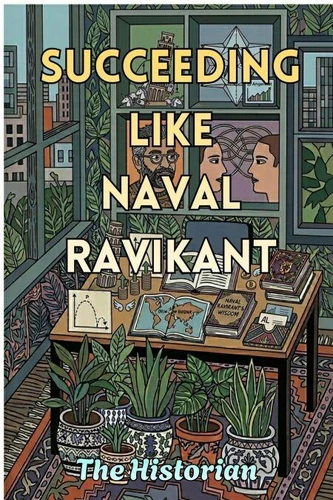
If you had to name the single most distinctive thinker produced by the twenty-first century, a surprisingly large number of thoughtful people would offer the same name: Naval Ravikant. He is a billionaire investor and the co-founder of AngelList, but more than that, he is a philosopher who happens to have built companies, and a meditator who happens to have become wealthy. What makes him unusual is not the money.
It is the architecture of his mind. Naval became a global cultural figure not through a memoir or a bestseller but through a single Twitter thread posted in 2018. "How to Get Rich (without getting lucky)" was not a listicle of hustle tips. It was a complete philosophical system compressed into two hundred and forty characters at a time: leverage, specific knowledge, permissionless income, accountability, judgment.
Millions read it and felt, many for the first time, that someone had handed them a map rather than a motivational poster. This book does not treat Naval's life as a success story. It treats it as a case study in how a mind is built. We will follow him from the public libraries of the South Bronx, where an immigrant child discovered that books were the only free passport available to him, through the carnage of the dot-com crash, through the founding of AngelList, and into the quieter, stranger territory of his later years, when a man who had achieved almost every material goal turned inward and began asking what any of it was actually for.
If you had to name the single most distinctive thinker produced by the twenty-first century, a surprisingly large number of thoughtful people would offer the same name: Naval Ravikant. He is a billionaire investor and the co-founder of AngelList, but more than that, he is a philosopher who happens to have built companies, and a meditator who happens to have become wealthy. What makes him unusual is not the money.
It is the architecture of his mind. Naval became a global cultural figure not through a memoir or a bestseller but through a single Twitter thread posted in 2018. "How to Get Rich (without getting lucky)" was not a listicle of hustle tips. It was a complete philosophical system compressed into two hundred and forty characters at a time: leverage, specific knowledge, permissionless income, accountability, judgment.
Millions read it and felt, many for the first time, that someone had handed them a map rather than a motivational poster. This book does not treat Naval's life as a success story. It treats it as a case study in how a mind is built. We will follow him from the public libraries of the South Bronx, where an immigrant child discovered that books were the only free passport available to him, through the carnage of the dot-com crash, through the founding of AngelList, and into the quieter, stranger territory of his later years, when a man who had achieved almost every material goal turned inward and began asking what any of it was actually for.

 , qui est-ce ?