
Hicham Benjelloun is a Moroccan writer, professor of finance, and trading coach whose work often explores discipline, pressure, self-mastery, and the hidden psychological systems that shape human behavior. His fiction blends literary introspection with high-stakes professional worlds, examining how people confront fear, ambition, memory, and the private voices that govern their choices. In Pace of the Mind, he brings that interest to the world of elite running, following the fragile space between talent and trust, performance and identity, the body's limits and the mind's noise.
Nouveauté
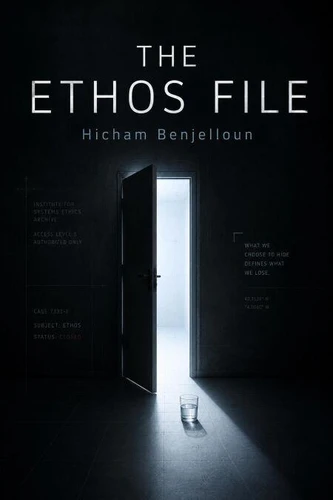
THE ETHOS FILE
Par :Formats :
Disponible dans votre compte client Decitre ou Furet du Nord dès validation de votre commande. Le format ePub est :
- Compatible avec une lecture sur My Vivlio (smartphone, tablette, ordinateur)
- Compatible avec une lecture sur liseuses Vivlio
- Pour les liseuses autres que Vivlio, vous devez utiliser le logiciel Adobe Digital Edition. Non compatible avec la lecture sur les liseuses Kindle, Remarkable et Sony
 , qui est-ce ?
Notre partenaire de plateforme de lecture numérique où vous retrouverez l'ensemble de vos ebooks gratuitement
Pour en savoir plus sur nos ebooks, consultez notre aide en ligne ici
C'est si simple ! Lisez votre ebook avec l'app Vivlio sur votre tablette, mobile ou ordinateur :

- FormatePub
- ISBN8232206192
- EAN9798232206192
- Date de parution31/08/2026
- Protection num.pas de protection
- Infos supplémentairesepub
- ÉditeurDraft2Digital
Résumé
When Amina enters her dead son Omar's apartment, she finds no confession, no farewell, no explanation-only a clean glass beside the sink and a phone notification announcing that his trust profile has changed. The number on the screen is low enough to have closed doors around him: a job withdrawn, a bank account restricted, housing delayed, a volunteer position suspended, appeals ignored until they expired.
Each refusal had seemed isolated. Together, they form something more disturbing: a hidden sequence of polite decisions, automated classifications, and institutional evasions that slowly made Omar's life smaller before it ended. With the help of Noura Rami, Omar's former psychologist, Malik El Idrissi, a disgraced risk-model architect, and Celia Grant, a lawyer skilled in the language of containment, Amina begins to trace the machinery behind her son's decline.
What they uncover is not a single villain, but a world capable of seeing vulnerability in exquisite detail while remaining unable-or unwilling-to care. As families, whistleblowers, journalists, and officials are drawn into the investigation, Omar's story becomes the center of a larger reckoning: who is responsible when a system does not kill directly, but teaches every door how to close?The Ethos File is a haunting novel of grief, power, and moral visibility, about the difference between being measured and being known-and about a mother who refuses to let a score become the final witness to her son's life.
Each refusal had seemed isolated. Together, they form something more disturbing: a hidden sequence of polite decisions, automated classifications, and institutional evasions that slowly made Omar's life smaller before it ended. With the help of Noura Rami, Omar's former psychologist, Malik El Idrissi, a disgraced risk-model architect, and Celia Grant, a lawyer skilled in the language of containment, Amina begins to trace the machinery behind her son's decline.
What they uncover is not a single villain, but a world capable of seeing vulnerability in exquisite detail while remaining unable-or unwilling-to care. As families, whistleblowers, journalists, and officials are drawn into the investigation, Omar's story becomes the center of a larger reckoning: who is responsible when a system does not kill directly, but teaches every door how to close?The Ethos File is a haunting novel of grief, power, and moral visibility, about the difference between being measured and being known-and about a mother who refuses to let a score become the final witness to her son's life.
A propos de Hicham Benjelloun

The Last Variable
E-book
4,49 €

The Eternal Draft
E-book
4,49 €

4,49 €

A PERFECT KINDNESS
E-book
5,49 €
La Salle des Témoins
E-book
5,49 €

PACE OF THE MIND
E-book
4,49 €
5,49 €

رحلة الشرفاء
E-book
3,49 €

Before the Word
E-book
4,49 €
5,49 €

The First Room
E-book
5,49 €

La Salle des 95%
E-book
3,49 €

La Taille des Choses
E-book
5,49 €

5,49 €
5,49 €

THE CHOSEN SIX
E-book
4,49 €

TWO CLICKS
E-book
5,49 €

Ce qui ne compte pas
E-book
4,49 €

Whispers by the Sea
E-book
5,49 €