PhD in Genetics, Postdoctoral researcher in the field of molecular diagnostics. Johannes Gutenberg University of Mainz / Germany Paul-Ehrlich-Straße 51-59, 63225 Langen (Hesse), Germany. Science Department
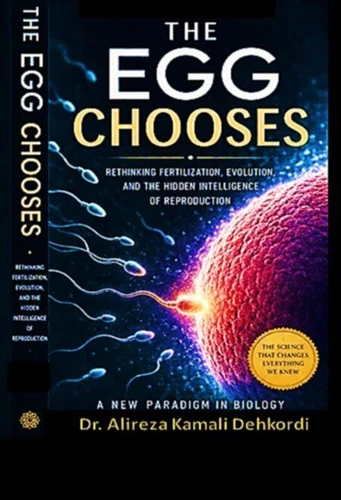
The Egg Chooses
Par :Formats :
Disponible dans votre compte client Decitre ou Furet du Nord dès validation de votre commande. Le format ePub est :
- Compatible avec une lecture sur My Vivlio (smartphone, tablette, ordinateur)
- Compatible avec une lecture sur liseuses Vivlio
- Pour les liseuses autres que Vivlio, vous devez utiliser le logiciel Adobe Digital Edition. Non compatible avec la lecture sur les liseuses Kindle, Remarkable et Sony
 , qui est-ce ?
Notre partenaire de plateforme de lecture numérique où vous retrouverez l'ensemble de vos ebooks gratuitement
Pour en savoir plus sur nos ebooks, consultez notre aide en ligne ici
C'est si simple ! Lisez votre ebook avec l'app Vivlio sur votre tablette, mobile ou ordinateur :

- FormatePub
- ISBN8235112957
- EAN9798235112957
- Date de parution21/05/2026
- Protection num.pas de protection
- Infos supplémentairesepub
- ÉditeurIoakim Ioakim
Résumé
Introduction For centuries, humanity told itself a simple story about reproduction. The male pursued. The female received. The sperm acted. The egg waited. That narrative became deeply embedded not only in science, but in culture, language, education, and philosophy. Textbooks described millions of sperm racing heroically toward a passive egg. Illustrations portrayed the sperm as explorers, warriors, competitors, conquerors.
The egg appeared motionless and silent, a biological prize waiting to be claimed. The metaphor seemed obvious. And like many obvious ideas in science, it turned out to be incomplete. Over the last several decades, reproductive biology has undergone a quiet revolution. Researchers began observing that eggs and the tissues surrounding them were not passive at all. They released signals. They altered environments.
They shaped outcomes. The female reproductive system was not merely a location where fertilization happened; it was an active participant in determining whether fertilization happened and which sperm succeeded. One of the most fascinating discoveries came from research showing that eggs may chemically attract certain sperm more strongly than others. This was not science fiction. It was measurable biochemistry.
The implications were profound. Fertilization was no longer simply a race. It was communication. This book explores that transformation in scientific understanding. It traces the history of reproductive biology, examines the research that challenged old assumptions, and asks deeper questions about evolution, compatibility, attraction, fertility, and the hidden complexity of life itself. The story of fertilization is not just about reproduction.
It is about how science changes. It is about how assumptions shape discovery. And it is about how biology repeatedly reveals a world far more intricate than human imagination first assumed
The egg appeared motionless and silent, a biological prize waiting to be claimed. The metaphor seemed obvious. And like many obvious ideas in science, it turned out to be incomplete. Over the last several decades, reproductive biology has undergone a quiet revolution. Researchers began observing that eggs and the tissues surrounding them were not passive at all. They released signals. They altered environments.
They shaped outcomes. The female reproductive system was not merely a location where fertilization happened; it was an active participant in determining whether fertilization happened and which sperm succeeded. One of the most fascinating discoveries came from research showing that eggs may chemically attract certain sperm more strongly than others. This was not science fiction. It was measurable biochemistry.
The implications were profound. Fertilization was no longer simply a race. It was communication. This book explores that transformation in scientific understanding. It traces the history of reproductive biology, examines the research that challenged old assumptions, and asks deeper questions about evolution, compatibility, attraction, fertility, and the hidden complexity of life itself. The story of fertilization is not just about reproduction.
It is about how science changes. It is about how assumptions shape discovery. And it is about how biology repeatedly reveals a world far more intricate than human imagination first assumed