PhD in Genetics, Postdoctoral researcher in the field of molecular diagnostics. Johannes Gutenberg University of Mainz / Germany Paul-Ehrlich-Straße 51-59, 63225 Langen (Hesse), Germany. Science Department
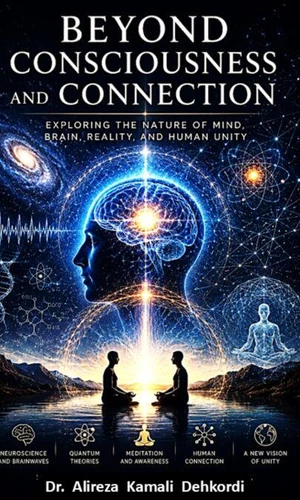
Beyond Consciousness and Connection
Par :Formats :
Disponible dans votre compte client Decitre ou Furet du Nord dès validation de votre commande. Le format ePub est :
- Compatible avec une lecture sur My Vivlio (smartphone, tablette, ordinateur)
- Compatible avec une lecture sur liseuses Vivlio
- Pour les liseuses autres que Vivlio, vous devez utiliser le logiciel Adobe Digital Edition. Non compatible avec la lecture sur les liseuses Kindle, Remarkable et Sony
 , qui est-ce ?
Notre partenaire de plateforme de lecture numérique où vous retrouverez l'ensemble de vos ebooks gratuitement
Pour en savoir plus sur nos ebooks, consultez notre aide en ligne ici
C'est si simple ! Lisez votre ebook avec l'app Vivlio sur votre tablette, mobile ou ordinateur :

- FormatePub
- ISBN8235472501
- EAN9798235472501
- Date de parution09/06/2026
- Protection num.pas de protection
- Infos supplémentairesepub
- ÉditeurIoakim Ioakim
Résumé
Introduction Human consciousness remains one of the greatest mysteries in science. Despite extraordinary advances in neuroscience, physics, and cognitive psychology, researchers still struggle to explain how subjective awareness emerges from biological matter. For centuries, philosophers and spiritual traditions proposed that consciousness may not be limited entirely to the physical brain. Mystics, meditators, and contemplative traditions described experiences of unity, shared awareness, intuition, and mental connection that appeared to transcend ordinary sensory communication.
Modern neuroscience traditionally explains consciousness as a product of neural computation within the brain. However, a small but persistent group of researchers has explored the possibility that consciousness may possess nonlocal properties-meaning that under certain conditions, mental states could become correlated across distance. One category of controversial experiments involves two individuals placed in isolated rooms after undergoing deep synchronized meditation.
In several reported cases, when one participant received a visual stimulus such as a flash of light, the second participant allegedly displayed a correlated neural response despite the absence of known physical communication. These claims remain controversial and highly debated. Critics argue that methodological weaknesses, statistical errors, environmental contamination, and unconscious biases can explain such findings.
Supporters argue that the persistence of these observations across decades deserves deeper investigation.
Modern neuroscience traditionally explains consciousness as a product of neural computation within the brain. However, a small but persistent group of researchers has explored the possibility that consciousness may possess nonlocal properties-meaning that under certain conditions, mental states could become correlated across distance. One category of controversial experiments involves two individuals placed in isolated rooms after undergoing deep synchronized meditation.
In several reported cases, when one participant received a visual stimulus such as a flash of light, the second participant allegedly displayed a correlated neural response despite the absence of known physical communication. These claims remain controversial and highly debated. Critics argue that methodological weaknesses, statistical errors, environmental contamination, and unconscious biases can explain such findings.
Supporters argue that the persistence of these observations across decades deserves deeper investigation.