PhD in Genetics, Postdoctoral researcher in the field of molecular diagnostics. Johannes Gutenberg University of Mainz / Germany Paul-Ehrlich-Straße 51-59, 63225 Langen (Hesse), Germany. Science Department
Cellular Reprogramming and the Future of Human Longevity
Par :Formats :
Disponible dans votre compte client Decitre ou Furet du Nord dès validation de votre commande. Le format ePub est :
- Compatible avec une lecture sur My Vivlio (smartphone, tablette, ordinateur)
- Compatible avec une lecture sur liseuses Vivlio
- Pour les liseuses autres que Vivlio, vous devez utiliser le logiciel Adobe Digital Edition. Non compatible avec la lecture sur les liseuses Kindle, Remarkable et Sony
 , qui est-ce ?
Notre partenaire de plateforme de lecture numérique où vous retrouverez l'ensemble de vos ebooks gratuitement
Pour en savoir plus sur nos ebooks, consultez notre aide en ligne ici
C'est si simple ! Lisez votre ebook avec l'app Vivlio sur votre tablette, mobile ou ordinateur :

- FormatePub
- ISBN8235418295
- EAN9798235418295
- Date de parution28/06/2026
- Protection num.pas de protection
- Infos supplémentairesepub
- ÉditeurIoakim Ioakim
Résumé
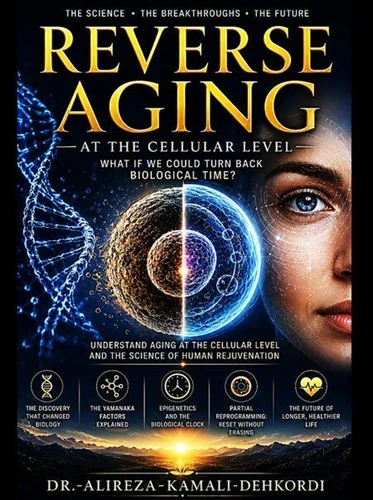
Introduction For centuries, humanity has searched for ways to slow aging, extend health, and preserve vitality. Ancient civilizations sought mythical fountains of youth. Modern science searches for molecular pathways hidden inside living cells. Today, one of the most ambitious scientific ideas has entered a new phase: testing whether human cells can be biologically rejuvenated. A clinical trial has begun to evaluate a method known as cellular reprogramming-an experimental approach that attempts to restore aged cells to a younger functional state.
Although this does not mean immortality or age reversal in humans, it represents one of the most significant milestones in longevity research.
Although this does not mean immortality or age reversal in humans, it represents one of the most significant milestones in longevity research.