Pianist Jonathan Blenheim inadvertently causes the note C sharp to physically vanish from the world's tonal systems while practising Rachmaninov's notorious Prelude in C sharp minor, Opus 3 Number 4. This idiosyncratic incident leads to the Great Modulation, a state of incipient universal auditory crisis. In response, the Bureau of Eclectic Notation (BEN) attempts to enforce substitution of C charp by D flat, which fiercely protests this assimilation, arguing that identity transcends frequency.
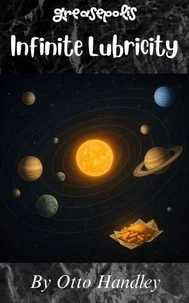
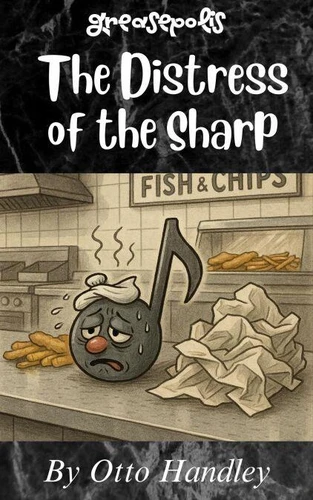
The missing note, having been transformed into a sentient vibration, seeks refuge not in air, but in grease, ultimately settling in the fryer of chip shop owner Wotof Wongip, which becomes a mystical crucible. The crisis culminates in a philosophical schism between the sterile Cult of the Unsharp and the advocates of harmonic viscosity (led by the prophet Frank and his apostle Glen the Fryer), before the C sharp is finally resurrected, changed forever, The world learns that true harmony lies not in rigid perfection but in "grease-touch, " forgiveness, and tonal imperfection.
Pianist Jonathan Blenheim inadvertently causes the note C sharp to physically vanish from the world's tonal systems while practising Rachmaninov's notorious Prelude in C sharp minor, Opus 3 Number 4. This idiosyncratic incident leads to the Great Modulation, a state of incipient universal auditory crisis. In response, the Bureau of Eclectic Notation (BEN) attempts to enforce substitution of C charp by D flat, which fiercely protests this assimilation, arguing that identity transcends frequency.
The missing note, having been transformed into a sentient vibration, seeks refuge not in air, but in grease, ultimately settling in the fryer of chip shop owner Wotof Wongip, which becomes a mystical crucible. The crisis culminates in a philosophical schism between the sterile Cult of the Unsharp and the advocates of harmonic viscosity (led by the prophet Frank and his apostle Glen the Fryer), before the C sharp is finally resurrected, changed forever, The world learns that true harmony lies not in rigid perfection but in "grease-touch, " forgiveness, and tonal imperfection.


 , qui est-ce ?