Nouveauté
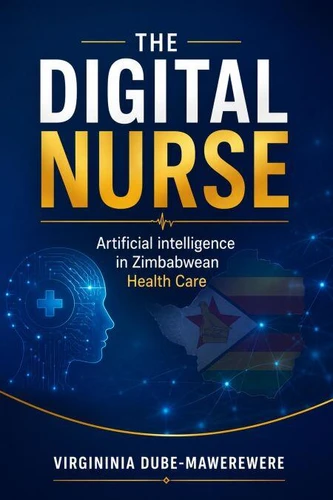
The digital Nurse: Artificial intelligence in Zimbabwean Health Care
Par :Formats :
Disponible dans votre compte client Decitre ou Furet du Nord dès validation de votre commande. Le format ePub est :
- Compatible avec une lecture sur My Vivlio (smartphone, tablette, ordinateur)
- Compatible avec une lecture sur liseuses Vivlio
- Pour les liseuses autres que Vivlio, vous devez utiliser le logiciel Adobe Digital Edition. Non compatible avec la lecture sur les liseuses Kindle, Remarkable et Sony
 , qui est-ce ?
Notre partenaire de plateforme de lecture numérique où vous retrouverez l'ensemble de vos ebooks gratuitement
Pour en savoir plus sur nos ebooks, consultez notre aide en ligne ici
C'est si simple ! Lisez votre ebook avec l'app Vivlio sur votre tablette, mobile ou ordinateur :

- FormatePub
- ISBN8235740747
- EAN9798235740747
- Date de parution17/07/2026
- Protection num.pas de protection
- Infos supplémentairesepub
- ÉditeurIoakim Ioakim
Résumé
Healthcare is changing in ways we could not have imagined a generation ago. Across the globe, artificial intelligence is reshaping how people receive care, how clinicians make decisions, and how health systems keep themselves running. For Zimbabwe, where nurses are quite literally the backbone of healthcare delivery, this shift creates both enormous possibilities and some serious questions worth sitting with.
This book, The Digital Nurse: Artificial Intelligence in Zimbabwean Healthcare, was written to explore how AI can genuinely strengthen nursing practice, improve outcomes for patients, and help build health systems that can withstand real pressure. It is not a book about gadgets or software. It is a book about people. Nurses, patients, policymakers, and educators all sit at the centre of this transformation, and each chapter tries to hold that human reality in view.
The chapters ahead highlight what AI makes possible while staying honest about the obstacles, the ethical complexities, and the careful work needed to ensure that innovation serves everyone. The vision behind this writing is straightforward: to give Zimbabwe's healthcare community a practical roadmap. One that encourages nurses to engage with digital tools from a place of confidence, gives policymakers something solid to work with, and supports the kinds of partnerships that make adoption sustainable rather than superficial.
Above all, this book keeps returning to a truth that no algorithm can change. Machines can make things faster and more precise, but they cannot replace what happens between a nurse and a patient at the bedside. That human connection remains irreplaceable.
This book, The Digital Nurse: Artificial Intelligence in Zimbabwean Healthcare, was written to explore how AI can genuinely strengthen nursing practice, improve outcomes for patients, and help build health systems that can withstand real pressure. It is not a book about gadgets or software. It is a book about people. Nurses, patients, policymakers, and educators all sit at the centre of this transformation, and each chapter tries to hold that human reality in view.
The chapters ahead highlight what AI makes possible while staying honest about the obstacles, the ethical complexities, and the careful work needed to ensure that innovation serves everyone. The vision behind this writing is straightforward: to give Zimbabwe's healthcare community a practical roadmap. One that encourages nurses to engage with digital tools from a place of confidence, gives policymakers something solid to work with, and supports the kinds of partnerships that make adoption sustainable rather than superficial.
Above all, this book keeps returning to a truth that no algorithm can change. Machines can make things faster and more precise, but they cannot replace what happens between a nurse and a patient at the bedside. That human connection remains irreplaceable.