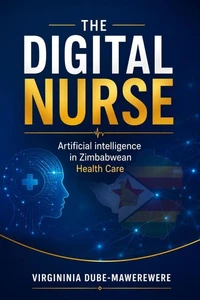
Dr Virgininia Dube-Mawerewere is a nurse by training. She is currently a lSenior lecturer in the Department of Nursing Science. She has a vested interest in military engineering , aircrash investigations and NASA documentaries
Nouveauté
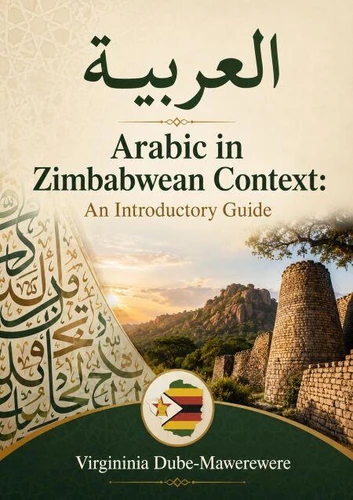
Arabic in Zimbabwean Context: An Introductory Guide
Par :Formats :
Disponible dans votre compte client Decitre ou Furet du Nord dès validation de votre commande. Le format ePub est :
- Compatible avec une lecture sur My Vivlio (smartphone, tablette, ordinateur)
- Compatible avec une lecture sur liseuses Vivlio
- Pour les liseuses autres que Vivlio, vous devez utiliser le logiciel Adobe Digital Edition. Non compatible avec la lecture sur les liseuses Kindle, Remarkable et Sony
 , qui est-ce ?
Notre partenaire de plateforme de lecture numérique où vous retrouverez l'ensemble de vos ebooks gratuitement
Pour en savoir plus sur nos ebooks, consultez notre aide en ligne ici
C'est si simple ! Lisez votre ebook avec l'app Vivlio sur votre tablette, mobile ou ordinateur :

- FormatePub
- ISBN8235576407
- EAN9798235576407
- Date de parution18/07/2026
- Protection num.pas de protection
- Infos supplémentairesepub
- ÉditeurIoakim Ioakim
Résumé
Languages are living bridges that connect people, cultures, and histories. This book, Arabic in Zimbabwean Context: An Introductory Guide, was written to introduce learners to the basics of Arabic while situating the language within Zimbabwe's diverse cultural and linguistic landscape. Recognizing that Zimbabwe is home to rich indigenous languages, I have deliberately integrated Shona and Ndebele examples throughout the text.
This approach not only grounds Arabic learning in familiar linguistic structures but also celebrates the interplay between local languages and global ones. By weaving Shona and Ndebele into the guide, learners can see how Arabic resonates with Zimbabwean contexts, making the study of the language more accessible and meaningful. This book is intended for beginners. It offers foundational vocabulary, grammar, and cultural notes, while encouraging readers to pursue deeper study through formal instruction and community practice.
It does not aim to be exhaustive, but rather to spark curiosity and provide a stepping stone toward greater fluency. This work is an invitation: to explore Arabic not as a distant language, but as one that can enrich Zimbabwe's educational, cultural, and spiritual exchanges. By situating Arabic alongside Shona and Ndebele, I hope to inspire learners to appreciate the beauty of linguistic diversity and the power of languages to connect us across borders.
This approach not only grounds Arabic learning in familiar linguistic structures but also celebrates the interplay between local languages and global ones. By weaving Shona and Ndebele into the guide, learners can see how Arabic resonates with Zimbabwean contexts, making the study of the language more accessible and meaningful. This book is intended for beginners. It offers foundational vocabulary, grammar, and cultural notes, while encouraging readers to pursue deeper study through formal instruction and community practice.
It does not aim to be exhaustive, but rather to spark curiosity and provide a stepping stone toward greater fluency. This work is an invitation: to explore Arabic not as a distant language, but as one that can enrich Zimbabwe's educational, cultural, and spiritual exchanges. By situating Arabic alongside Shona and Ndebele, I hope to inspire learners to appreciate the beauty of linguistic diversity and the power of languages to connect us across borders.