SOLDES
Jusqu'à -70% sur une sélection d'articles*

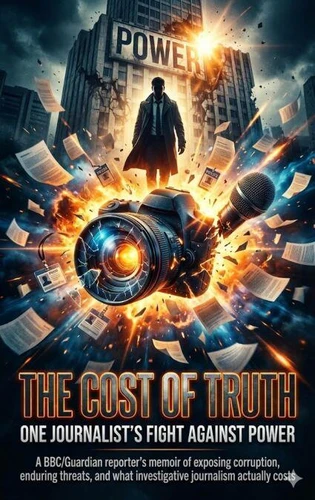
The Cost of Truth: One Journalist's Fight Against Power. A BBC/Guardian reporter's memoir of exposing corruption, enduring threats, and what investigative journalism actually costs
Par :Formats :
Disponible dans votre compte client Decitre ou Furet du Nord dès validation de votre commande. Le format ePub est :
- Compatible avec une lecture sur My Vivlio (smartphone, tablette, ordinateur)
- Compatible avec une lecture sur liseuses Vivlio
- Pour les liseuses autres que Vivlio, vous devez utiliser le logiciel Adobe Digital Edition. Non compatible avec la lecture sur les liseuses Kindle, Remarkable et Sony
 , qui est-ce ?
Notre partenaire de plateforme de lecture numérique où vous retrouverez l'ensemble de vos ebooks gratuitement
Pour en savoir plus sur nos ebooks, consultez notre aide en ligne ici
C'est si simple ! Lisez votre ebook avec l'app Vivlio sur votre tablette, mobile ou ordinateur :

- Nombre de pages211
- FormatePub
- ISBN978-3-565-13457-1
- EAN9783565134571
- Date de parution18/12/2025
- Protection num.pas de protection
- Taille343 Ko
- Infos supplémentairesepub
- ÉditeurEmphaloz Publishing House
Résumé
She followed the thread where others feared to pull. A politician's hidden offshore account. A corporate cover-up of environmental disaster. A decades-old abuse network protected by institutional silence. Each investigation meant late nights cross-referencing documents, cultivating sources willing to risk everything, and navigating legal threats designed to silence her before publication.
This is the intimate memoir of a British investigative journalist whose work has toppled reputations and exposed systemic corruption-yet cost her professionally, personally, and psychologically in ways the public never sees.
Through gripping accounts of high-stakes reporting, nail-biting publication standoffs with legal teams, and the peculiar isolation of knowing dangerous truths before you can tell them, the narrator reveals what happens when you dedicate your career to holding power accountable. But beyond the bylines lies a darker landscape: the sources traumatized by their own testimony, the colleagues suffering PTSD from trauma reporting, the editors pressured by corporate advertisers to kill stories, the political operatives orchestrating smear campaigns against journalists, and the personal relationships fractured by work that cannot be discussed for legal reasons.
She explores the gendered nature of journalistic intimidation-the particular targeting of female reporters-and the blurred line between professional risk and physical danger. This memoir interrogates contemporary media landscape: Why do powerful institutions still believe they can suppress truth? How do journalists maintain integrity when newsrooms are shrinking and resources diminishing? What does it cost mentally to carry secrets that expose corruption? And can individual journalists actually change anything when systems are designed to protect themselves?
Through gripping accounts of high-stakes reporting, nail-biting publication standoffs with legal teams, and the peculiar isolation of knowing dangerous truths before you can tell them, the narrator reveals what happens when you dedicate your career to holding power accountable. But beyond the bylines lies a darker landscape: the sources traumatized by their own testimony, the colleagues suffering PTSD from trauma reporting, the editors pressured by corporate advertisers to kill stories, the political operatives orchestrating smear campaigns against journalists, and the personal relationships fractured by work that cannot be discussed for legal reasons.
She explores the gendered nature of journalistic intimidation-the particular targeting of female reporters-and the blurred line between professional risk and physical danger. This memoir interrogates contemporary media landscape: Why do powerful institutions still believe they can suppress truth? How do journalists maintain integrity when newsrooms are shrinking and resources diminishing? What does it cost mentally to carry secrets that expose corruption? And can individual journalists actually change anything when systems are designed to protect themselves?