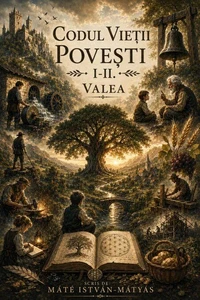
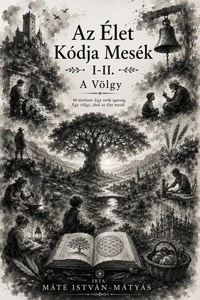
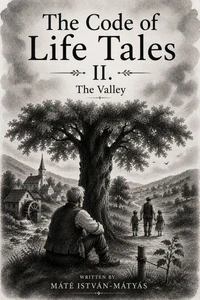
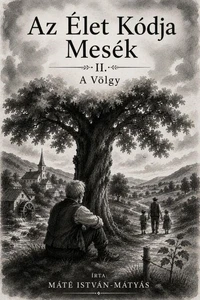
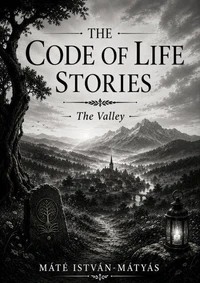
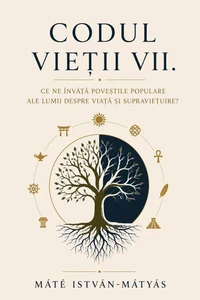
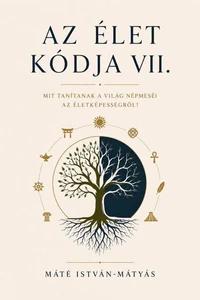
The Algorithm Behind the Stories: What Ancient Myths Can Teach Modern Decision-Makers and Artificial IntelligenceWhat links the clever youngest prince of Hungarian folklore, the pride-blinded heroes of Greek tragedy, the strategic animals of the Panchatantra, and the governance protocols of ancient Sumer? On the surface, they are merely cultural relics from vanished worlds. Beneath that surface, however, lies the exact same operating framework-a deeply embedded human "software" honed across millennia.
This groundbreaking monograph presents a rigorous comparative analysis of eleven major folklore traditions: Hungarian, Brothers Grimm, Arabian (One Thousand and One Nights), Greek, Norse, Biblical, Japanese, Indigenous North American, Mayan, and Sumerian. The authors establish that world mythology and folklore are neither naive entertainment nor primitive superstition. They are compressed, multi-generational decision-making databases encoding the accumulated survival strategies of our species.
By mapping these narratives side by side, the book reveals The Code of Life-a dynamic, self-correcting operating structure that guides complex systems through existential crises. Why This Book Is Essential Reading 11 Traditions, 1 Universal Code: Embark on an intellectual journey through diverse cultural risk maps. Learn why Hungarian tales prioritize resourcefulness, why Greek myths enforce systemic boundaries against hubris, why Biblical tradition centers on relational repair, and why Sumerian myths emphasize institutional memory.
Beyond Clichéd Morality: The book moves far past rigid moralism. It demonstrates how isolated virtues degenerate when applied out of context-how unconstrained courage turns into recklessness, patience degrades into procrastination, and superficial harmony converts into dangerous reality denial. Redefining Human Intelligence: True intelligence is not raw analytical speed or finding the shortest path to an objective.
It is the integrated evaluation of the goal, the path, and the long-term viability of the broader system. A Framework for AI Safety and Governance: The monograph's most urgent application focuses on Artificial Intelligence alignment. Optimizing an advanced AI system on a single metric leads directly to Goodhart's Law and catastrophic specification gaming-an exact failure mode mythologized in the legend of King Midas.
Ancient folklore provides modern engineers with hard viability constraints, uncertainty estimation protocols, and structural safety limits required for human-aligned AI. Neither an abstract academic text nor a simplistic self-help manual, this work offers a clear, highly structured, and deeply inspiring investigation. It challenges you to re-evaluate your decision-making processes, rethink your relationship with error, and realize that the internal compass needed to navigate today's complex crises was coded by our ancestors thousands of years ago.
Discover the ancient codes that have sustained human viability across millennia-and learn how to deploy them for the future.
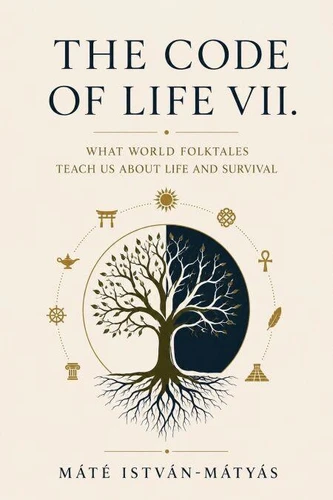
The Algorithm Behind the Stories: What Ancient Myths Can Teach Modern Decision-Makers and Artificial IntelligenceWhat links the clever youngest prince of Hungarian folklore, the pride-blinded heroes of Greek tragedy, the strategic animals of the Panchatantra, and the governance protocols of ancient Sumer? On the surface, they are merely cultural relics from vanished worlds. Beneath that surface, however, lies the exact same operating framework-a deeply embedded human "software" honed across millennia.
This groundbreaking monograph presents a rigorous comparative analysis of eleven major folklore traditions: Hungarian, Brothers Grimm, Arabian (One Thousand and One Nights), Greek, Norse, Biblical, Japanese, Indigenous North American, Mayan, and Sumerian. The authors establish that world mythology and folklore are neither naive entertainment nor primitive superstition. They are compressed, multi-generational decision-making databases encoding the accumulated survival strategies of our species.
By mapping these narratives side by side, the book reveals The Code of Life-a dynamic, self-correcting operating structure that guides complex systems through existential crises. Why This Book Is Essential Reading 11 Traditions, 1 Universal Code: Embark on an intellectual journey through diverse cultural risk maps. Learn why Hungarian tales prioritize resourcefulness, why Greek myths enforce systemic boundaries against hubris, why Biblical tradition centers on relational repair, and why Sumerian myths emphasize institutional memory.
Beyond Clichéd Morality: The book moves far past rigid moralism. It demonstrates how isolated virtues degenerate when applied out of context-how unconstrained courage turns into recklessness, patience degrades into procrastination, and superficial harmony converts into dangerous reality denial. Redefining Human Intelligence: True intelligence is not raw analytical speed or finding the shortest path to an objective.
It is the integrated evaluation of the goal, the path, and the long-term viability of the broader system. A Framework for AI Safety and Governance: The monograph's most urgent application focuses on Artificial Intelligence alignment. Optimizing an advanced AI system on a single metric leads directly to Goodhart's Law and catastrophic specification gaming-an exact failure mode mythologized in the legend of King Midas.
Ancient folklore provides modern engineers with hard viability constraints, uncertainty estimation protocols, and structural safety limits required for human-aligned AI. Neither an abstract academic text nor a simplistic self-help manual, this work offers a clear, highly structured, and deeply inspiring investigation. It challenges you to re-evaluate your decision-making processes, rethink your relationship with error, and realize that the internal compass needed to navigate today's complex crises was coded by our ancestors thousands of years ago.
Discover the ancient codes that have sustained human viability across millennia-and learn how to deploy them for the future.

 , qui est-ce ?