
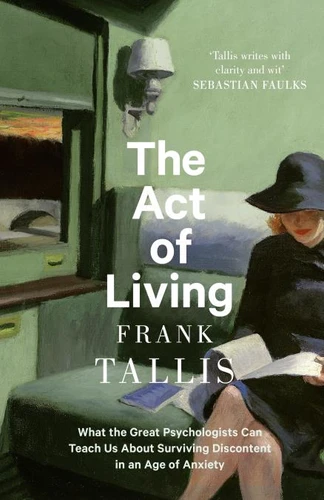
The Act of Living. What the Great Psychologists Can Teach Us About Surviving Discontent in an Age of Anxiety
Par :Formats :
Disponible dans votre compte client Decitre ou Furet du Nord dès validation de votre commande. Le format ePub protégé est :
- Compatible avec une lecture sur My Vivlio (smartphone, tablette, ordinateur)
- Compatible avec une lecture sur liseuses Vivlio
- Pour les liseuses autres que Vivlio, vous devez utiliser le logiciel Adobe Digital Edition. Non compatible avec la lecture sur les liseuses Kindle, Remarkable et Sony
- Non compatible avec un achat hors France métropolitaine
 , qui est-ce ?
Notre partenaire de plateforme de lecture numérique où vous retrouverez l'ensemble de vos ebooks gratuitement
Pour en savoir plus sur nos ebooks, consultez notre aide en ligne ici
C'est si simple ! Lisez votre ebook avec l'app Vivlio sur votre tablette, mobile ou ordinateur :

- Nombre de pages352
- FormatePub
- ISBN978-1-4087-1135-4
- EAN9781408711354
- Date de parution10/06/2020
- Protection num.Adobe DRM
- Infos supplémentairesepub
- ÉditeurLittle, Brown Book Group
Résumé
'Tallis writes with clarity and wit' Sebastian FaulksScience, technology and western liberal democracy have all had a dramatic impact on our quality of life. Compared to previous generations, we have unprecedented access to information, increased personal freedom, more material comforts and more possessions. Yet, even before the shock of Covid-19, more people than ever before were reporting being depressed, anxious or unfulfilled.
As our material circumstances become easier, life seems to get harder. Why should this be? Shelves sag under the weight of self-help manuals and the internet is awash with the advice of role-models and celebrity gurus; however, to what extent can these sources be expected to supply meaningful, practical answers - the kind of answers relevant to sceptical individuals living in a modern, technologically advanced culture? For over a hundred years, psychotherapists have been developing and refining models of the human mind.
They have endeavoured to alleviate distress and they have offered help to people who want to make better life choices. Although the clinical provenance of psychotherapy is important, the legacy of psychotherapy has much wider relevance. It can offer original perspectives on the big questions usually entrusted to philosophers and representative of faith: Who am I? Why am I here? How should I live?In this compelling and important book, the principle contributions of the outstanding figures associated with the practice of psychotherapy are explained: from Freud to Ellis, Jung to Laing, Adler to Hayes.
Viewed as a single, cohesive intellectual tradition, Frank Tallis argues that psychotherapeutic thinking is an immensely valuable and under exploited resource.
As our material circumstances become easier, life seems to get harder. Why should this be? Shelves sag under the weight of self-help manuals and the internet is awash with the advice of role-models and celebrity gurus; however, to what extent can these sources be expected to supply meaningful, practical answers - the kind of answers relevant to sceptical individuals living in a modern, technologically advanced culture? For over a hundred years, psychotherapists have been developing and refining models of the human mind.
They have endeavoured to alleviate distress and they have offered help to people who want to make better life choices. Although the clinical provenance of psychotherapy is important, the legacy of psychotherapy has much wider relevance. It can offer original perspectives on the big questions usually entrusted to philosophers and representative of faith: Who am I? Why am I here? How should I live?In this compelling and important book, the principle contributions of the outstanding figures associated with the practice of psychotherapy are explained: from Freud to Ellis, Jung to Laing, Adler to Hayes.
Viewed as a single, cohesive intellectual tradition, Frank Tallis argues that psychotherapeutic thinking is an immensely valuable and under exploited resource.
A propos de Frank Tallis


9,50 €

9,20 €
9,20 €


11,99 €
12,99 €
4,49 €

2/5
La chambre des âmes
E-book
12,99 €

How to Stop Worrying
E-book
3,99 €

4/5
Les portes de l'interdit
E-book
12,99 €