SOLDES
Jusqu'à -70% sur une sélection d'articles*

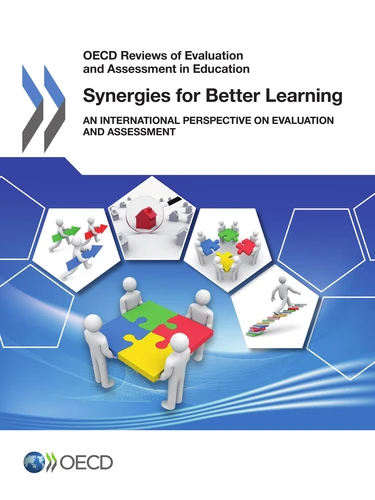
Synergies for better learning - an international perspective on evaluation and - assessment
Par :Formats :
Disponible dans votre compte client Decitre ou Furet du Nord dès validation de votre commande. Le format PDF est :
- Compatible avec une lecture sur My Vivlio (smartphone, tablette, ordinateur)
- Compatible avec une lecture sur liseuses Vivlio
- Pour les liseuses autres que Vivlio, vous devez utiliser le logiciel Adobe Digital Edition. Non compatible avec la lecture sur les liseuses Kindle, Remarkable et Sony
 , qui est-ce ?
Notre partenaire de plateforme de lecture numérique où vous retrouverez l'ensemble de vos ebooks gratuitement
Pour en savoir plus sur nos ebooks, consultez notre aide en ligne ici
C'est si simple ! Lisez votre ebook avec l'app Vivlio sur votre tablette, mobile ou ordinateur :

- Nombre de pages672
- FormatPDF
- ISBN978-92-64-19065-8
- EAN9789264190658
- Date de parution11/04/2013
- Protection num.Digital Watermarking
- Taille10 Mo
- Infos supplémentairespdf
- ÉditeurOECD
Résumé
How can assessment and evaluation policies work together more effectively to improve student outcomes in primary and secondary schools? Countries increasingly use a range of techniques for student assessment, teacher appraisal, school evaluation, school leader appraisal and education system evaluation. However, they often face difficulties in implementing evaluation and assessment policies. This may arise as a result of poor policy design, lack of analysis of unintended consequences, little capacity for school agents to put evaluation procedures into practice, lack of an evaluation culture, or deficient use of evaluation results.
This report provides an international comparative analysis and policy advice to countries on how evaluation and assessment arrangements can be embedded within a consistent framework to improve the quality, equity and efficiency of school education. It builds upon a major 3-year review of evaluation and assessment policies in 28 countries, the OECD Review on Evaluation and Assessment Frameworks for Improving School Outcomes.
As well as analysing strengths and weaknesses of different approaches, the report provides recommendations for improvement including how results should be incorporated into policy and practice.
This report provides an international comparative analysis and policy advice to countries on how evaluation and assessment arrangements can be embedded within a consistent framework to improve the quality, equity and efficiency of school education. It builds upon a major 3-year review of evaluation and assessment policies in 28 countries, the OECD Review on Evaluation and Assessment Frameworks for Improving School Outcomes.
As well as analysing strengths and weaknesses of different approaches, the report provides recommendations for improvement including how results should be incorporated into policy and practice.
A propos de OCDE


32,99 €

72,99 €

33,99 €

32,99 €
32,99 €

32,00 €

Tax compilance by design
E-book
16,00 €

16,00 €

19,00 €

16,00 €

25,00 €


23,00 €

Women in business 2014
E-book
31,00 €

