Jörg Rüpke ist Professor für Vergleichende Religionswissenschaft an der Universität Erfurt. Er beschäftigt sich in seinen Arbeiten vornehmlich mit antiker Religionsgeschichte.
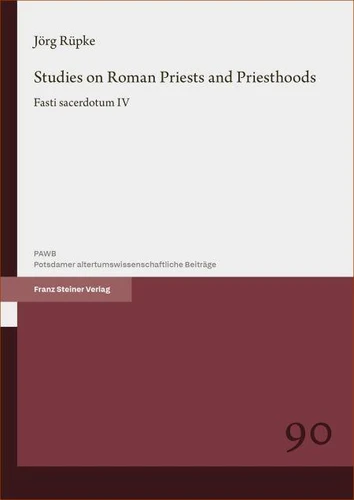
Studies on Roman Priests and Priesthoods. Fasti sacerdotum. Volume 4
Par :Formats :
Disponible dans votre compte client Decitre ou Furet du Nord dès validation de votre commande. Le format PDF est :
- Compatible avec une lecture sur My Vivlio (smartphone, tablette, ordinateur)
- Compatible avec une lecture sur liseuses Vivlio
- Pour les liseuses autres que Vivlio, vous devez utiliser le logiciel Adobe Digital Edition. Non compatible avec la lecture sur les liseuses Kindle, Remarkable et Sony
 , qui est-ce ?
Notre partenaire de plateforme de lecture numérique où vous retrouverez l'ensemble de vos ebooks gratuitement
Pour en savoir plus sur nos ebooks, consultez notre aide en ligne ici
C'est si simple ! Lisez votre ebook avec l'app Vivlio sur votre tablette, mobile ou ordinateur :

- Nombre de pages198
- FormatPDF
- ISBN978-3-515-14013-3
- EAN9783515140133
- Date de parution07/11/2025
- Protection num.Digital Watermarking
- Taille2 Mo
- Infos supplémentairespdf
- ÉditeurFranz Steiner
Résumé
Previous research on ancient state or city religion has suggested that the growth and multiplication of priesthoods in Rome was a means of dispersing religious authority within a growing aristocratic class. Tendencies towards recentralisation can also be observed in the course of the imperial period.
This volume draws a picture of the processes of religious specialisation as they are discussed today under the term 'urban religion' for ancient cities and metropolises.
The prosopographical data of the Fasti sacerdotum are used to examine how religious actors in Rome dealt with the challenges and opportunities of urbanisation and reshaped religious practices according to their experiences and their vision of the urban. The focus is on the historicisation of these processes in a city that became the capital of an empire. However, the focus is not on an imperial, but on a local and glocalised religion.
Religious roles and their interactions reacted to political institutions and social values and shaped them at the same time.
The prosopographical data of the Fasti sacerdotum are used to examine how religious actors in Rome dealt with the challenges and opportunities of urbanisation and reshaped religious practices according to their experiences and their vision of the urban. The focus is on the historicisation of these processes in a city that became the capital of an empire. However, the focus is not on an imperial, but on a local and glocalised religion.
Religious roles and their interactions reacted to political institutions and social values and shaped them at the same time.
A propos de Jörg Rüpke
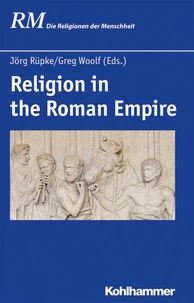
79,99 €
43,99 €
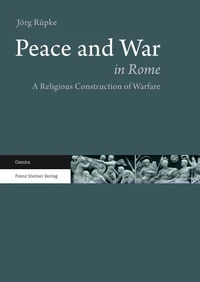
70,00 €
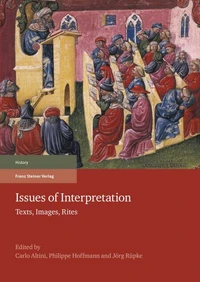
40,00 €