
Nouveauté
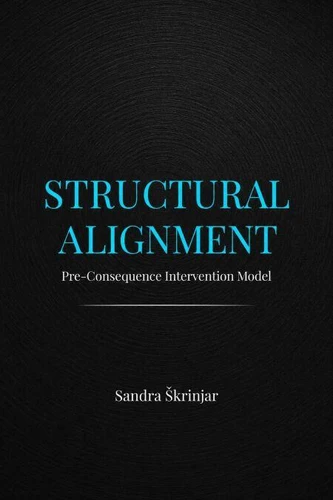
Structural Alignment
Par :Formats :
Disponible dans votre compte client Decitre ou Furet du Nord dès validation de votre commande. Le format ePub est :
- Compatible avec une lecture sur My Vivlio (smartphone, tablette, ordinateur)
- Compatible avec une lecture sur liseuses Vivlio
- Pour les liseuses autres que Vivlio, vous devez utiliser le logiciel Adobe Digital Edition. Non compatible avec la lecture sur les liseuses Kindle, Remarkable et Sony
 , qui est-ce ?
Notre partenaire de plateforme de lecture numérique où vous retrouverez l'ensemble de vos ebooks gratuitement
Pour en savoir plus sur nos ebooks, consultez notre aide en ligne ici
C'est si simple ! Lisez votre ebook avec l'app Vivlio sur votre tablette, mobile ou ordinateur :

- FormatePub
- ISBN8235796805
- EAN9798235796805
- Date de parution18/06/2026
- Protection num.pas de protection
- Infos supplémentairesepub
- ÉditeurIoakim Ioakim
Résumé
Structural Alignment presents a public theoretical model for understanding how adaptive systems move toward consequence before visible failure appears. The book defines a causal sequence through which signal becomes reduction, reduction becomes divergence, divergence becomes accumulation, accumulation approaches threshold, and threshold becomes consequence. It separates continuation from validity, correction from feedback, presence from authority, execution from legitimacy, trace from proof, and resonance from validation.
Written across human, biological, organizational, institutional, technological, and AI contexts, this work argues that consequence is late. A system may still function, explain itself, and continue while the producing layer has already begun to lose fidelity. This book does not present an audit protocol, certification method, checklist, or implementation manual. It offers the public model of Structural Alignment as intervention before consequence hardens into visible form.
Written across human, biological, organizational, institutional, technological, and AI contexts, this work argues that consequence is late. A system may still function, explain itself, and continue while the producing layer has already begun to lose fidelity. This book does not present an audit protocol, certification method, checklist, or implementation manual. It offers the public model of Structural Alignment as intervention before consequence hardens into visible form.
A propos de Sandra Škrinjar


6,49 €
6,49 €