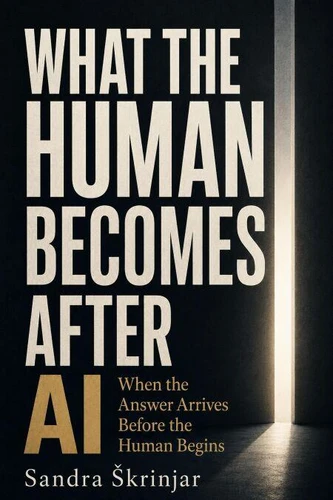
Artificial intelligence does not need to replace the human in order to change the human. It only needs to arrive early enough. Before the person has met the question. Before memory has carried weight. Before language has struggled toward thought. Before judgment has formed its own measure. WHAT THE HUMAN BECOMES AFTER AI examines the quiet structural change that begins when answers, summaries, frames, options, and language arrive before the first movement has formed from within.
This is not a book about whether artificial intelligence is good or bad. It is a book about sequence. The danger is not only that AI may do what the human once did. The deeper danger is that it may enter before the human has had to begin. When assistance enters after attention, memory, language, judgment, and responsibility have begun inside the human, it may extend formation. When it enters before those capacities are summoned, it may begin to replace the very conditions through which the human remains formed.
The supported self can function. It can answer, choose, write, respond, and continue. But functioning is not the same as beginning. Only the formed self can begin. In a world where the answer can arrive first, something still has to begin inside.
Artificial intelligence does not need to replace the human in order to change the human. It only needs to arrive early enough. Before the person has met the question. Before memory has carried weight. Before language has struggled toward thought. Before judgment has formed its own measure. WHAT THE HUMAN BECOMES AFTER AI examines the quiet structural change that begins when answers, summaries, frames, options, and language arrive before the first movement has formed from within.
This is not a book about whether artificial intelligence is good or bad. It is a book about sequence. The danger is not only that AI may do what the human once did. The deeper danger is that it may enter before the human has had to begin. When assistance enters after attention, memory, language, judgment, and responsibility have begun inside the human, it may extend formation. When it enters before those capacities are summoned, it may begin to replace the very conditions through which the human remains formed.
The supported self can function. It can answer, choose, write, respond, and continue. But functioning is not the same as beginning. Only the formed self can begin. In a world where the answer can arrive first, something still has to begin inside.

 , qui est-ce ?