A former corporate burnout who rebuilt her life through mindfulness routines, now blending self-help for stress mastery, business coaching on team wellness, and historical analysis of wellness movements in industrial eras.
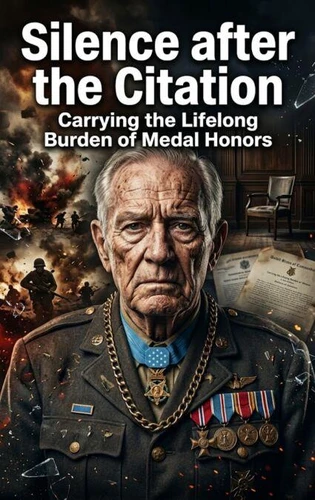
Silence after the Citation. Carrying the Lifelong Burden of Medal Honors
Par :Formats :
Disponible dans votre compte client Decitre ou Furet du Nord dès validation de votre commande. Le format ePub est :
- Compatible avec une lecture sur My Vivlio (smartphone, tablette, ordinateur)
- Compatible avec une lecture sur liseuses Vivlio
- Pour les liseuses autres que Vivlio, vous devez utiliser le logiciel Adobe Digital Edition. Non compatible avec la lecture sur les liseuses Kindle, Remarkable et Sony
 , qui est-ce ?
Notre partenaire de plateforme de lecture numérique où vous retrouverez l'ensemble de vos ebooks gratuitement
Pour en savoir plus sur nos ebooks, consultez notre aide en ligne ici
C'est si simple ! Lisez votre ebook avec l'app Vivlio sur votre tablette, mobile ou ordinateur :

- Nombre de pages156
- FormatePub
- ISBN978-3-565-40918-1
- EAN9783565409181
- Date de parution14/04/2026
- Protection num.pas de protection
- Taille1 Mo
- Infos supplémentairesepub
- ÉditeurEmphaloz Publishing House
Résumé
The medal arrives with ceremony, with handshakes, with a president's gratitude. What it cannot arrive with is an explanation - a reason why this man survived the moment that killed the man beside him, and what he is supposed to do with the rest of his life knowing that. For the men who received America's highest military decoration in the European Theater of World War II, the citation answered one question - what happened - while leaving the larger one entirely open: what does it mean to have done what you did, and to still be alive?
Silence after the Citation is a study of what the Medal of Honor cost its recipients after the war was over.
More than half a million American service members suffered psychiatric collapse during World War II - a figure the military suppressed for decades - and 40 percent of all medical discharges were psychiatric in nature. Among Medal of Honor recipients, the internal reckoning was, paradoxically, often more acute than among ordinary veterans: the very acts of extreme courage that earned the decoration were inseparable from the deaths of the men they had tried to save, the comrades who died in the same moment that made them heroes.
Many recipients reported that the medal felt less like a recognition and more like a permanent ledger entry - a debt to the dead they could never fully repay.
More than half a million American service members suffered psychiatric collapse during World War II - a figure the military suppressed for decades - and 40 percent of all medical discharges were psychiatric in nature. Among Medal of Honor recipients, the internal reckoning was, paradoxically, often more acute than among ordinary veterans: the very acts of extreme courage that earned the decoration were inseparable from the deaths of the men they had tried to save, the comrades who died in the same moment that made them heroes.
Many recipients reported that the medal felt less like a recognition and more like a permanent ledger entry - a debt to the dead they could never fully repay.
A propos de Veda Grant


24,99 €



9,99 €