A former corporate burnout who rebuilt her life through mindfulness routines, now blending self-help for stress mastery, business coaching on team wellness, and historical analysis of wellness movements in industrial eras.
Nouveauté
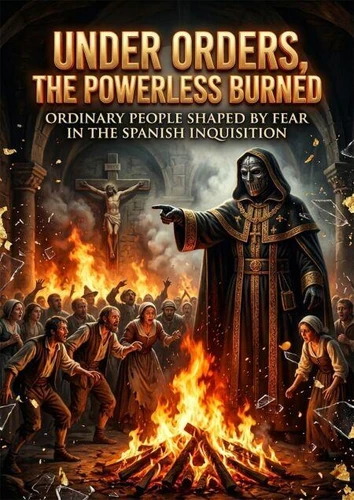
Under orders, the powerless burned. Ordinary people shaped by fear in the Spanish Inquisition
Par :Formats :
Disponible dans votre compte client Decitre ou Furet du Nord dès validation de votre commande. Le format ePub est :
- Compatible avec une lecture sur My Vivlio (smartphone, tablette, ordinateur)
- Compatible avec une lecture sur liseuses Vivlio
- Pour les liseuses autres que Vivlio, vous devez utiliser le logiciel Adobe Digital Edition. Non compatible avec la lecture sur les liseuses Kindle, Remarkable et Sony
 , qui est-ce ?
Notre partenaire de plateforme de lecture numérique où vous retrouverez l'ensemble de vos ebooks gratuitement
Pour en savoir plus sur nos ebooks, consultez notre aide en ligne ici
C'est si simple ! Lisez votre ebook avec l'app Vivlio sur votre tablette, mobile ou ordinateur :

- Nombre de pages191
- FormatePub
- ISBN978-3-565-59536-5
- EAN9783565595365
- Date de parution28/07/2026
- Protection num.pas de protection
- Taille1 Mo
- Infos supplémentairesepub
- ÉditeurEmphaloz Publishing House
Résumé
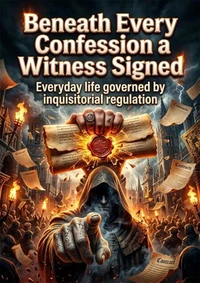
A summons arriving at dawn. A name whispered in confession. In sixteenth-century Spain, the machinery of religious authority reached into every village, every home, and every conscience. The Spanish Inquisition operated not only as a tribunal of faith but as a system of social control that rewrote the boundaries between public belief and private survival. Through reconstructed cases from Toledo to Valencia, the mechanisms that turned neighbors into informants and priests into interrogators come into focus.
The inquisitorial process relied less on theological rigor than on procedural theater-the staging of authority, the slow erosion of certainty, and the calculated use of mercy. Behind each auto-da-fé lay a network of local officials, seized property, and families torn apart by accusation. Jewish and Muslim converts-conversos and moriscos-navigated a world where ancestry could become evidence, adapting, resisting, and sometimes collaborating.
This is not a story of fanaticism alone, but of bureaucracy: a system sustained through paperwork, testimony, and the quiet complicity of those who chose not to look away. The Inquisition did not end because Spain grew enlightened, but when its methods no longer served the crown. Its legacy-the memory of surveillance, the weight of orthodoxy-outlasted the tribunals by centuries. A history of power as it was felt from below: in the knock on the door, the missing name from the register, the silence that followed.
The inquisitorial process relied less on theological rigor than on procedural theater-the staging of authority, the slow erosion of certainty, and the calculated use of mercy. Behind each auto-da-fé lay a network of local officials, seized property, and families torn apart by accusation. Jewish and Muslim converts-conversos and moriscos-navigated a world where ancestry could become evidence, adapting, resisting, and sometimes collaborating.
This is not a story of fanaticism alone, but of bureaucracy: a system sustained through paperwork, testimony, and the quiet complicity of those who chose not to look away. The Inquisition did not end because Spain grew enlightened, but when its methods no longer served the crown. Its legacy-the memory of surveillance, the weight of orthodoxy-outlasted the tribunals by centuries. A history of power as it was felt from below: in the knock on the door, the missing name from the register, the silence that followed.
A propos de Veda Grant


24,99 €






9,99 €