Nouveauté
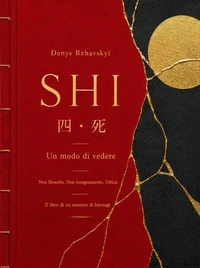
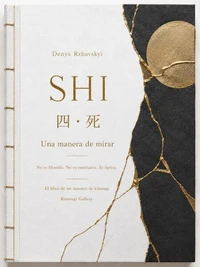
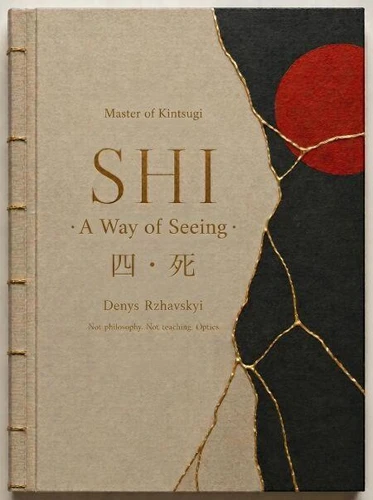
SHI. A Way of Seeing. Not philosophy. Not teaching. Optics.
Par :Formats :
Disponible dans votre compte client Decitre ou Furet du Nord dès validation de votre commande. Le format ePub est :
- Compatible avec une lecture sur My Vivlio (smartphone, tablette, ordinateur)
- Compatible avec une lecture sur liseuses Vivlio
- Pour les liseuses autres que Vivlio, vous devez utiliser le logiciel Adobe Digital Edition. Non compatible avec la lecture sur les liseuses Kindle, Remarkable et Sony
 , qui est-ce ?
Notre partenaire de plateforme de lecture numérique où vous retrouverez l'ensemble de vos ebooks gratuitement
Pour en savoir plus sur nos ebooks, consultez notre aide en ligne ici
C'est si simple ! Lisez votre ebook avec l'app Vivlio sur votre tablette, mobile ou ordinateur :

- FormatePub
- ISBN8235010079
- EAN9798235010079
- Date de parution09/06/2026
- Protection num.pas de protection
- Infos supplémentairesepub
- ÉditeurIoakim Ioakim
Résumé
They call him a master of kintsugi. He mends broken things with gold and does not hide the seams. SHI is a Japanese sound with two meanings: four, and death. This book is built on that coincidence. Four pillars - Love, Death, Time, Presence - four sides of one way of seeing, and at the base of each lies the same quiet fact: everything ends. Not as a threat. As the place all the value comes from. It began as four recorded conversations, each twenty minutes long, a voice speaking into the dark.
The book enters those conversations and stays as long as it needs to. Where the voice gave a single sentence, the book stands inside that sentence for an hour. It is not philosophy, and it is not teaching. It is optics: a way of looking at what you already have, before it is taken away. At the people you assume are eternal. At the time you store away in later. At the moment that is passing through you as you read this line.
The author does not write from a summit. He writes from inside the same river, beside the reader, and he says so plainly: my hand is no steadier than yours. What he offers is not a system but a craft - the craft of holding things without gripping them, the way an open palm holds fire so that it can breathe. You grip. You notice. You let go. Three words, repeated like breathing, across love and jealousy and cold; across hospital corridors, four a.m.
silences, and the handwriting of those who are gone; across hours and seasons; down to the bare fact of being here while it runs. This is a book to be read slowly - one chapter at a time, sometimes half a chapter. At the end of each chapter there is a single line. Take it. Live with it for a week. Then come back. What is broken can be put back together. Not as it was. As something new, with gold lines where the breaks ran.
And the mended thing is worth more than the untouched one - because it has a biography. For readers of Oliver Burkeman, Pico Iyer, and John Berger: a quiet, severe, consoling book about loving what does not stay.
The book enters those conversations and stays as long as it needs to. Where the voice gave a single sentence, the book stands inside that sentence for an hour. It is not philosophy, and it is not teaching. It is optics: a way of looking at what you already have, before it is taken away. At the people you assume are eternal. At the time you store away in later. At the moment that is passing through you as you read this line.
The author does not write from a summit. He writes from inside the same river, beside the reader, and he says so plainly: my hand is no steadier than yours. What he offers is not a system but a craft - the craft of holding things without gripping them, the way an open palm holds fire so that it can breathe. You grip. You notice. You let go. Three words, repeated like breathing, across love and jealousy and cold; across hospital corridors, four a.m.
silences, and the handwriting of those who are gone; across hours and seasons; down to the bare fact of being here while it runs. This is a book to be read slowly - one chapter at a time, sometimes half a chapter. At the end of each chapter there is a single line. Take it. Live with it for a week. Then come back. What is broken can be put back together. Not as it was. As something new, with gold lines where the breaks ran.
And the mended thing is worth more than the untouched one - because it has a biography. For readers of Oliver Burkeman, Pico Iyer, and John Berger: a quiet, severe, consoling book about loving what does not stay.