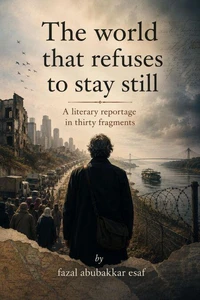
The modern world often presents morality as clarity-right or wrong, success or failure, virtue or vice. Yet lived experience resists such simplicity. It unfolds instead in hesitation, partial truths, and choices made under emotional pressure. This collection explores that resistance. Each story is rooted in a familiar social setting: a bus stand, a family courtyard, a school, a rented room, a village street, a newspaper office.
Within these spaces, characters confront moments that appear ordinary but quietly destabilize their internal worlds. The focus is not on dramatic transformation but on subtle dislocation-how a single encounter, memory, or decision can shift the way a person understands themselves. The stories collectively suggest that morality is not a fixed position but a continuous negotiation shaped by circumstance, history, and desire.
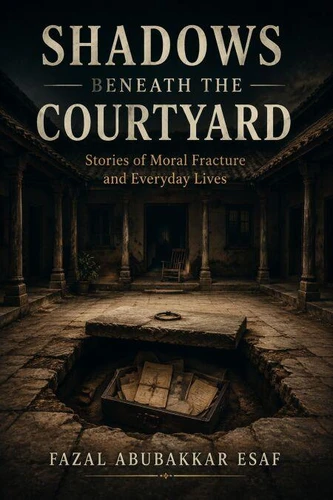
The modern world often presents morality as clarity-right or wrong, success or failure, virtue or vice. Yet lived experience resists such simplicity. It unfolds instead in hesitation, partial truths, and choices made under emotional pressure. This collection explores that resistance. Each story is rooted in a familiar social setting: a bus stand, a family courtyard, a school, a rented room, a village street, a newspaper office.
Within these spaces, characters confront moments that appear ordinary but quietly destabilize their internal worlds. The focus is not on dramatic transformation but on subtle dislocation-how a single encounter, memory, or decision can shift the way a person understands themselves. The stories collectively suggest that morality is not a fixed position but a continuous negotiation shaped by circumstance, history, and desire.


 , qui est-ce ?