
Author
Nouveauté
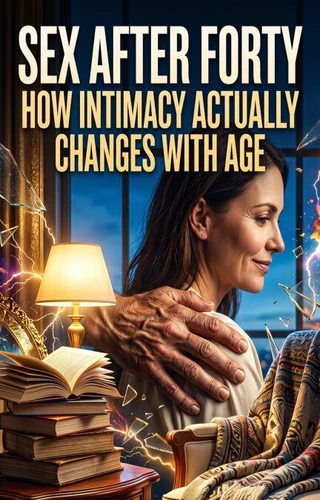
Sex After Forty. How Intimacy Actually Changes With Age
Par :Formats :
Disponible dans votre compte client Decitre ou Furet du Nord dès validation de votre commande. Le format ePub est :
- Compatible avec une lecture sur My Vivlio (smartphone, tablette, ordinateur)
- Compatible avec une lecture sur liseuses Vivlio
- Pour les liseuses autres que Vivlio, vous devez utiliser le logiciel Adobe Digital Edition. Non compatible avec la lecture sur les liseuses Kindle, Remarkable et Sony
 , qui est-ce ?
Notre partenaire de plateforme de lecture numérique où vous retrouverez l'ensemble de vos ebooks gratuitement
Pour en savoir plus sur nos ebooks, consultez notre aide en ligne ici
C'est si simple ! Lisez votre ebook avec l'app Vivlio sur votre tablette, mobile ou ordinateur :

- Nombre de pages150
- FormatePub
- ISBN978-3-565-56513-9
- EAN9783565565139
- Date de parution16/07/2026
- Protection num.pas de protection
- Taille758 Ko
- Infos supplémentairesepub
- ÉditeurEmphaloz Publishing House
Résumé
For countless adults over forty, a once-vibrant sex life seems to fade into memory. The spontaneous, urgent desire of youth disappears, leaving behind a confusing sense of loss and a fear that intimacy is broken.
This experience is often diagnosed as a personal failure, but what if the problem isn't with individuals, but with the map they were given? For decades, the cultural and medical understanding of sex, shaped by researchers like Masters and Johnson, was based on a rigid, linear model where desire must always come first.
Sex After Forty dismantles this myth.
Drawing on the groundbreaking work of figures like Rosemary Basson, it reveals the natural biological shift from "spontaneous" to "responsive" desire. This investigation shows how, for mature couples, arousal can precede desire, and how a state of "sexual neutrality" is a perfectly valid starting point for profound intimacy. This book uncovers the neurobiology of long-term attachment and provides a new framework for passion, proving that the second half of life can offer not a decline in sexuality, but a second, deeper, and more meaningful peak.
Drawing on the groundbreaking work of figures like Rosemary Basson, it reveals the natural biological shift from "spontaneous" to "responsive" desire. This investigation shows how, for mature couples, arousal can precede desire, and how a state of "sexual neutrality" is a perfectly valid starting point for profound intimacy. This book uncovers the neurobiology of long-term attachment and provides a new framework for passion, proving that the second half of life can offer not a decline in sexuality, but a second, deeper, and more meaningful peak.
A propos de Adrian Hollis







6,49 €