Nouveauté
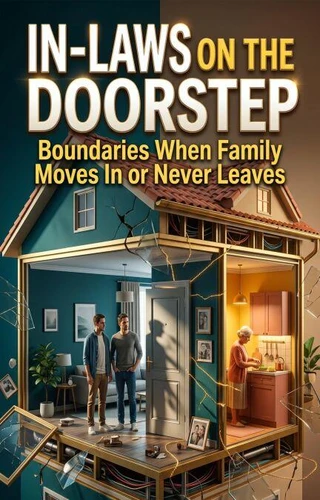
In-Laws on the Doorstep. Boundaries When Family Moves In or Never Leaves
Par :Formats :
Disponible dans votre compte client Decitre ou Furet du Nord dès validation de votre commande. Le format ePub est :
- Compatible avec une lecture sur My Vivlio (smartphone, tablette, ordinateur)
- Compatible avec une lecture sur liseuses Vivlio
- Pour les liseuses autres que Vivlio, vous devez utiliser le logiciel Adobe Digital Edition. Non compatible avec la lecture sur les liseuses Kindle, Remarkable et Sony
 , qui est-ce ?
Notre partenaire de plateforme de lecture numérique où vous retrouverez l'ensemble de vos ebooks gratuitement
Pour en savoir plus sur nos ebooks, consultez notre aide en ligne ici
C'est si simple ! Lisez votre ebook avec l'app Vivlio sur votre tablette, mobile ou ordinateur :

- Nombre de pages199
- FormatePub
- ISBN978-3-565-59631-7
- EAN9783565596317
- Date de parution28/07/2026
- Protection num.pas de protection
- Taille751 Ko
- Infos supplémentairesepub
- ÉditeurEmphaloz Publishing House
Résumé
The modern family is in crisis. As economic pressures push more generations under one roof, a quiet battle is being waged in living rooms across the country. In 2020, 52 percent of young adults lived with their parents, reversing decades of trends and creating a collision between the longing for a supportive 'village' and the modern demand for individual autonomy.
This book dissects the myth of the harmonious, boundary-less family, tracing its romanticized roots and contrasting it with the stark historical reality of the Roman domus.
It reveals why love is not enough to navigate shared living spaces and why good intentions often lead to resentment and hurt. Through compelling case studies like Liam, who clashes with his parents over dog food and curfews, the book exposes the unspoken scripts that trap families in cycles of conflict. The solution is not to reject family, but to redesign it. This investigation offers a radical new framework for the 'New Tribe, ' one built not on unspoken obligation but on explicit agreements, clear protocols, and mutual respect.
It demonstrates how to treat a shared household like a well-run organization, with defined roles and rigorous boundaries that create freedom rather than restriction. Discover the architecture that makes shared living possible, and learn how to build a family dynamic that is connected, not consuming.
It reveals why love is not enough to navigate shared living spaces and why good intentions often lead to resentment and hurt. Through compelling case studies like Liam, who clashes with his parents over dog food and curfews, the book exposes the unspoken scripts that trap families in cycles of conflict. The solution is not to reject family, but to redesign it. This investigation offers a radical new framework for the 'New Tribe, ' one built not on unspoken obligation but on explicit agreements, clear protocols, and mutual respect.
It demonstrates how to treat a shared household like a well-run organization, with defined roles and rigorous boundaries that create freedom rather than restriction. Discover the architecture that makes shared living possible, and learn how to build a family dynamic that is connected, not consuming.
A propos de Adrian Hollis









6,49 €