SOLDES
Jusqu'à -70% sur une sélection d'articles*
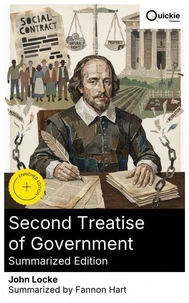
Second Treatise of Government. Enlightenment Theory of Governance and Individual Rights
Par :Formats :
Disponible dans votre compte client Decitre ou Furet du Nord dès validation de votre commande. Le format ePub est :
- Compatible avec une lecture sur My Vivlio (smartphone, tablette, ordinateur)
- Compatible avec une lecture sur liseuses Vivlio
- Pour les liseuses autres que Vivlio, vous devez utiliser le logiciel Adobe Digital Edition. Non compatible avec la lecture sur les liseuses Kindle, Remarkable et Sony
 , qui est-ce ?
Notre partenaire de plateforme de lecture numérique où vous retrouverez l'ensemble de vos ebooks gratuitement
Pour en savoir plus sur nos ebooks, consultez notre aide en ligne ici
C'est si simple ! Lisez votre ebook avec l'app Vivlio sur votre tablette, mobile ou ordinateur :

- Nombre de pages195
- FormatePub
- ISBN4057664091949
- EAN4057664091949
- Date de parution19/11/2019
- Protection num.Digital Watermarking
- Taille620 Ko
- Infos supplémentairesepub
- ÉditeurGOOD PRESS
Résumé
In his seminal work, 'Second Treatise of Government, ' John Locke articulates a groundbreaking framework for understanding political authority and individual rights. Written in the context of the Enlightenment, Locke employs a clear, rational style that emphasizes empirical reasoning and natural law. The treatise critiques absolute monarchy while laying the foundation for modern democratic thought, focusing on concepts such as the social contract, the right to revolt, and the state of nature.
Locke's thought both reflects and responds to the political upheaval of his time, particularly the Glorious Revolution, advocating for government as a construct to serve the will and rights of the governed. John Locke (1632-1704), a prominent English philosopher and physician, is often heralded as the father of Liberalism. His innovative ideas emerged from a milieu of civil conflict and philosophical inquiry, leading him to challenge prevailing notions of governance.
Influenced by earlier philosophers, including Hobbes and Descartes, Locke sought to reconcile individual liberty with collective responsibility, shaping his philosophical inquiries into the relationship between people and their government. 'Second Treatise of Government' is essential reading for anyone interested in the evolution of political philosophy and the origins of contemporary democratic ideals.
Locke's ideas resonate profoundly in today's discussions of human rights and governmental responsibility, making this work not only historically significant but also extraordinarily relevant for modern readers.
Locke's thought both reflects and responds to the political upheaval of his time, particularly the Glorious Revolution, advocating for government as a construct to serve the will and rights of the governed. John Locke (1632-1704), a prominent English philosopher and physician, is often heralded as the father of Liberalism. His innovative ideas emerged from a milieu of civil conflict and philosophical inquiry, leading him to challenge prevailing notions of governance.
Influenced by earlier philosophers, including Hobbes and Descartes, Locke sought to reconcile individual liberty with collective responsibility, shaping his philosophical inquiries into the relationship between people and their government. 'Second Treatise of Government' is essential reading for anyone interested in the evolution of political philosophy and the origins of contemporary democratic ideals.
Locke's ideas resonate profoundly in today's discussions of human rights and governmental responsibility, making this work not only historically significant but also extraordinarily relevant for modern readers.